
Mazes are the most underpriced opportunity on KDP in 2026. Word search is saturated and sudoku is competitive, but themed maze books for kids still have winnable sub-niches with 200 to 800 competing titles instead of 50,000. A four-hour build can produce a 60 maze book that earns $400 to $800 a month in steady state. The catch is that everything about maze books (path width, age targeting, theme stacking, cover signaling) is different from word search, and the playbook does not transfer. This is the playbook that does.
Why mazes are the 2026 opportunity
Three structural reasons explain why mazes are mispriced as a publishing opportunity right now.
- Lower production complexity than crosswords. No clue writing, no original copy. The maze is the entire puzzle. A batch generator outputs 80 mazes in 30 seconds.
- Stronger visual differentiation than word search. Word search books look identical on a cover thumbnail (a grid of letters). Maze book covers can use themed illustrations (dinosaurs, princesses, vehicles), which doubles the click-through rate on Amazon search.
- Kids gift market underserved. Word search and sudoku are adult-skewed. Mazes are kid-skewed, and the October to December kids gift window lifts maze sales by 60 to 100 percent without ad spend.
That structural advantage shows up in the niche math. Generic "maze books for kids" has 50,000+ competing titles - saturated. But specific themed queries like "dinosaur mazes for ages 6 to 8" or "vehicle mazes for preschoolers" return 200 to 800 listings, which is the publishable zone.
Age targeting (the single most important decision)
Pick one age band per book and design every spec around it. Mixed-age maze books ("for kids ages 4 to 12") underperform single-age books at 3:1 because parents filter Amazon search by specific age range, and the cover cannot honestly speak to both a 4 year old and a 12 year old simultaneously.
Ages 4 to 6 (preschool)
- Path width: 0.5 to 0.75 inches. Wide enough for a small finger to trace.
- Maze grid: 8 x 8 to 12 x 12 cells. Maze area roughly 4 x 4 inches on the page.
- Dead ends: 0 to 3 per maze, very short (1 to 2 turns)
- Solution length: 10 to 15 turns
- Cover style: Bright colors, animal characters, big rounded fonts
- Page count: 50 to 80 pages, $5.99 to $7.99 price
- Marketing angle: "Pre-K screen-free quiet time"
Ages 7 to 10 (early to mid elementary)
- Path width: 0.3 to 0.4 inches. Pencil-friendly.
- Maze grid: 15 x 15 to 20 x 20 cells. Maze area 5.5 to 6.5 inches on the page.
- Dead ends: 5 to 12 per maze, mix of short and long
- Solution length: 25 to 50 turns
- Cover style: Theme-specific (dinosaurs, space, princesses, vehicles)
- Page count: 80 to 120 pages, $6.99 to $9.99 price
- Marketing angle: "Brain-boosting screen-free activity"
Ages 11+ (tweens)
- Path width: 0.2 to 0.3 inches
- Maze grid: 25 x 25 to 35 x 35 cells. Maze area 6.5 to 7 inches.
- Dead ends: 15 to 25 per maze, longer dead ends that require real backtracking
- Cover style: Adventure or gaming aesthetics, sharper graphics
- Page count: 80 to 120 pages, $7.99 to $9.99 price
- Marketing angle: "Challenging mazes for skilled tweens"
Adults (challenge or large print)
- Path width: Adult challenge 0.15 to 0.25 inches. Adult large print 0.35 to 0.45 inches.
- Maze grid: Adult challenge 40 x 40 cells, large print 15 x 15 cells
- Dead ends: 25 to 40+ for challenge mazes
- Cover style: Minimalist abstract or themed (travel, mindfulness, landmarks)
- Page count: 80 to 120 pages, $8.99 to $11.99 price
- Marketing angle: Challenge buyers want "puzzle masters" framing. Large print senior buyers want "relaxing brain workout".
Maze styles (mix at least three per book)
A maze book of 80 identical rectangular grid mazes feels monotonous. Top sellers mix three to five maze styles within a single book to maintain interest. Style variation also extends the book's perceived value without changing the page count.
Rectangular grid (40 to 60 percent of the book)
The classic. Easy to generate, easy to solve, fits the page cleanly. Use as the workhorse style. Vary the dimensions (12 x 12, 15 x 15, 20 x 20) to create difficulty progression within the rectangular section.
Circular and spiral (15 to 25 percent)
Circular mazes (concentric rings with radial walls) and spiral mazes (one continuous spiral with branches) add visual variety. Best for ages 7+ because the orientation is less intuitive than rectangular. The cover signal "includes circular mazes" boosts perceived premium.
Themed shape (15 to 25 percent)
The maze fits inside a themed silhouette: dinosaur outline, rocket ship, princess crown, soccer ball. Themed shape mazes are the highest visual differentiation and the strongest cover differentiator. Production cost is higher (the silhouette has to be designed) but a single set of 20 themed shapes can be reused across multiple books in a series.
Word maze / letter path (5 to 10 percent)
A word maze generator places hidden letters along the maze path. The correct route spells a word. Great for educational themes ("solve the maze to find the secret word"). Use sparingly because it slows the solver. The word maze generator inside KDPEasy outputs these directly.
Mini-maze coloring pages (5 to 15 percent)
Auto-generated maze coloring pages embed a small maze inside a larger themed illustration that the kid colors after solving. The maze is the activity, the coloring is the reward. This hybrid format supports premium pricing ($7.99 to $10.99) because parents perceive double the value per book. See the best coloring book niches guide for the coloring side of this hybrid.
Difficulty progression within a single book
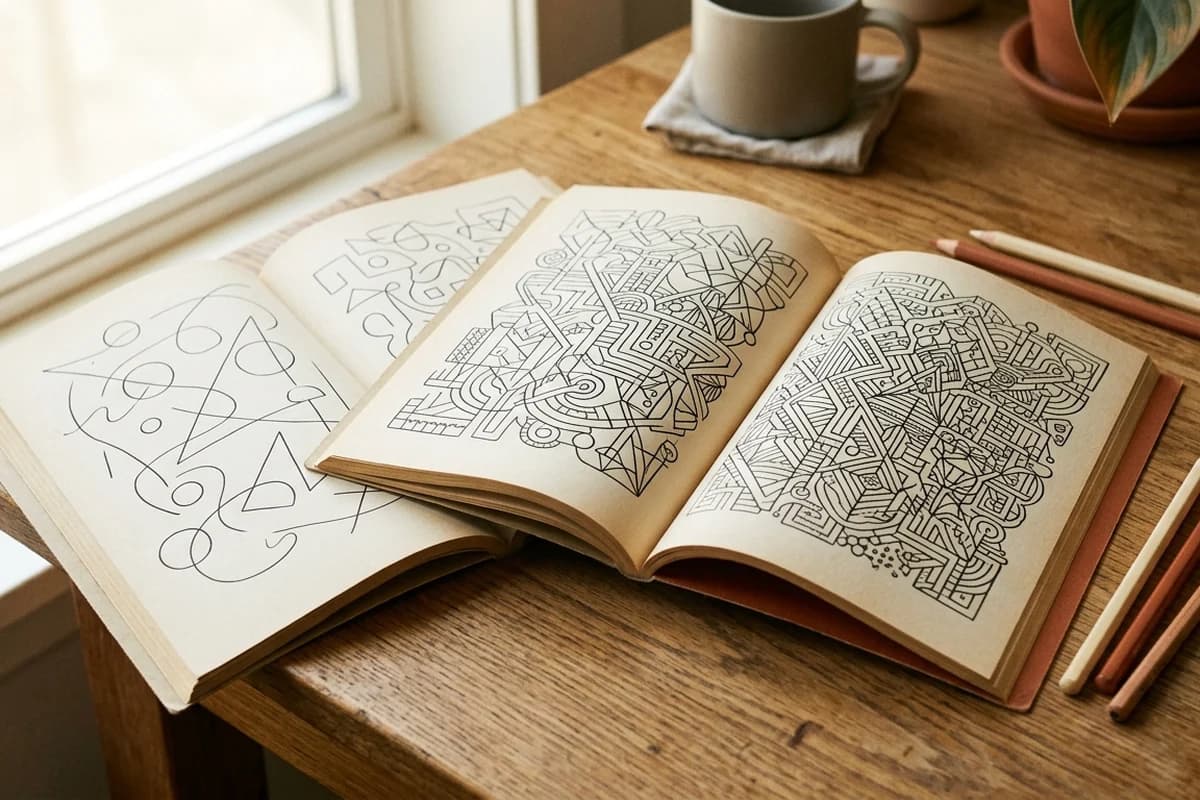
Random difficulty within a maze book frustrates young solvers. A 5 year old who hits a hard maze on page 3 quits the entire book. A 9 year old who slogs through 30 easy mazes before reaching a real challenge gets bored and writes a 2-star review.
The fix is a deliberate progression. For a 100 maze book targeting ages 6 to 8:
- Mazes 1 to 30 (easy): 1 to 3 dead ends, 10 to 15 turns, builds confidence and produces good first-page reviews
- Mazes 31 to 70 (medium): 5 to 12 dead ends, 25 to 40 turns, the core challenge zone
- Mazes 71 to 100 (hard): 15+ dead ends, 50+ turns, rewards persistent solvers and justifies the price
State the progression on the back cover and inside the front matter ("This book includes 100 mazes from easy to hard, perfect for kids ages 6 to 8 to grow into.") Parents specifically search for this signal.
Maze generators (free and paid)
Free maze generators
- Mazegenerator.net - the most popular free easy maze generator online. Rectangular, circular, hexagonal grids. Exports PNG or SVG one maze at a time.
- Daedalus (astrolog.org/labyrnth/daedalus.htm) - powerful free desktop maze generator with 3D mazes and theme overlays. Dated interface, steep learning curve.
- Discovery Education Puzzlemaker - simple maze generator aimed at teachers. Limited customization.
Free generators are good for one-off books and concept testing. The hidden cost is layout time: a 100 maze book on free tools takes 8 to 15 hours of clicking through the generator, exporting each maze, importing into Affinity Publisher or InDesign, and assembling the interior PDF manually.
Paid AI maze generators and batch tools
- KDPEasy (subscription) - batch generates 50 to 100 mazes with difficulty presets, themed shapes, and outputs a print-ready KDP interior PDF in one click. Includes word maze and coloring page overlays. Try the maze generator directly.
- Puzzle Generator Pro ($67 to $97 one-time) - desktop maze + puzzle generator. Less polished output than cloud tools but no subscription.
- Bookbolt (subscription) - low-content book platform with a maze generator module. Good if you publish across activity book categories.
What features the best maze generator software should have
- Batch generate at least 50 mazes at once with one click
- Multiple difficulty presets and a progression curve option
- Path width control (critical for age targeting)
- Themed-shape support (animal silhouettes, vehicles, holiday shapes)
- Matching solutions auto-generated with the maze
- 300 DPI vector or high-res raster export
- Print-ready PDF assembly with KDP-correct margins, page count, and back-of-book solutions
- Cover generation integration
Generate 80 print-ready mazes in one export
KDPEasy batch generates mazes with difficulty progression, themed shapes, and a print-ready KDP interior PDF including solutions. Free to try.
Create my maze book freePage count math for a maze book
Maze books run shorter than word search and sudoku because mazes occupy more visual space per puzzle. A 60 maze book is a satisfying size for ages 4 to 8. A 100 maze book is a serious size for ages 7+ or adults.
| Maze count | Front matter | Maze pages | Solution pages (4/page) | Back matter | Total pages |
|---|---|---|---|---|---|
| 50 mazes | 4 | 50 | 14 (2 divider + 12) | 2 | 70 |
| 80 mazes | 4 | 80 | 22 (2 divider + 20) | 2 | 108 |
| 100 mazes | 4 | 100 | 27 (2 divider + 25) | 2 | 134 (adjust to even = 134) |
At 108 pages on white paper a spine width of 0.243 inches gives just enough room for spine text. Below 80 pages KDP will not print spine text at all. Run the spine width through the spine width calculator when finalizing the cover.
Pricing strategy by target audience
| Book type | Maze count | Pages | Price | Royalty (60%) |
|---|---|---|---|---|
| Kids ages 3 to 5 (basic) | 50 | 70 | $5.99 | $1.69 |
| Kids ages 6 to 8 (themed) | 80 | 108 | $7.99 | $2.32 |
| Kids ages 9 to 12 | 100 | 134 | $8.99 | $2.62 |
| Hybrid mazes + coloring (premium) | 60 mazes + 20 color | 110 | $9.99 | $3.21 |
| Adult challenge mazes | 80 | 108 | $8.99 | $2.92 |
| Large print senior mazes | 60 | 85 | $11.99 | $4.79 |
Cover conventions that sell maze books
Maze book covers compete on visual differentiation. The biggest cover mistake is showing a generic maze on the cover, because every competing maze book does the same and your title becomes invisible in the search grid. Show the theme, not the puzzle.
Kids maze cover formula
- Hero illustration: A character or vehicle from the theme (cartoon dinosaur, rocket, princess). Big, centered, bright colors.
- Title at top: Bold rounded sans-serif. "Dinosaur Mazes" not "Maze Book". Theme first, format second.
- Age band sticker or banner: "Ages 6 to 8" in a contrasting badge. Parents filter Amazon by age.
- Quantity claim: "80 Fun Mazes" in a clear corner badge.
- Sample maze: Optionally a small maze tucked into a corner showing the visual style. Optional - the hero illustration usually carries the cover.
Adult / senior maze cover formula
- Restrained palette: 2 to 3 muted colors instead of bright kids palette
- Photo or minimalist illustration: A relaxing image (mountain landscape, mandala outline, geometric pattern)
- Title: Sans-serif but lighter weight than kids books. "Large Print Mazes for Adults" or "Challenging Mazes Volume 1".
- "Large Print" badge prominently displayed for senior books
Generate the cover at the exact dimensions from the KDP cover size calculator. For an AI-generated cover that auto-sizes to your page count, use the AI book cover generator.
Three example walkthroughs
Walkthrough 1: "Dinosaur Mazes for Kids Ages 6 to 8"
- Niche: dinosaur theme, ages 6 to 8 (most popular kids age band)
- Maze mix: 50 rectangular grid, 15 dinosaur-silhouette themed shape, 10 circular, 5 mini-maze coloring pages
- Difficulty: 30 easy + 35 medium + 15 hard
- Path width: 0.35 inches (pencil-friendly for the age)
- Page count: 108 pages
- Price: $7.99, royalty $2.32
- Cover: Cartoon T-Rex hero, "Dinosaur Mazes" title, "80 Mazes Ages 6 to 8" banner
- Build time: 4 hours with a batch maze generator
- Realistic 6-month sales: 120 to 280 copies a month at steady state, with strong gift season lift
Walkthrough 2: "Large Print Mazes for Adults and Seniors"
- Niche: large print, senior + adult challenge solver overlap
- Maze mix: 50 rectangular at 0.4 inch path width, 10 circular
- Difficulty: 60 mazes evenly easy + medium (skip hard for senior buyers)
- Page count: 85 pages
- Price: $11.99, royalty $4.79
- Cover: Mountain landscape illustration, "Large Print Mazes" big sans-serif, "60 Relaxing Mazes" banner
- Build time: 3 hours
- Realistic 6-month sales: 80 to 200 copies a month, lower volume but highest royalty per book in the maze category
Walkthrough 3: Hybrid "Vehicle Mazes and Coloring for Preschoolers"
- Niche: vehicles theme (cars, trucks, trains, planes), ages 3 to 5 hybrid activity
- Activity mix: 30 simple mazes with 0.6 inch paths + 30 themed coloring pages + 20 dot-to-dot
- Page count: 110 pages
- Price: $9.99, royalty $3.21
- Cover: Cartoon fire truck hero, "Vehicle Mazes and Coloring" title, "80 Activities Ages 3 to 5" banner
- Build time: 6 hours (more design work for the coloring pages)
- Realistic 6-month sales: 200 to 450 copies a month, highest revenue ceiling because the hybrid format and theme combination is underserved
Run your cover and royalty math in 2 minutes
Free KDP cover size calculator and royalty calculator. Plug in your maze book page count to see exact spine width and royalty per sale.
Open royalty calculatorSeries building (the multiplier)
A single maze book sells. A series of 5 to 10 maze books compounds. The compound is real: a 5 volume themed series at month 12 typically earns 4 to 8 times more than a single book on the same theme, because each volume reinforces the others through "buyers also bought" recommendations on Amazon.
Theme-based series (recommended)
- Volume 1: Dinosaur Mazes for Kids Ages 6 to 8
- Volume 2: Vehicle Mazes for Kids Ages 6 to 8
- Volume 3: Space Mazes for Kids Ages 6 to 8
- Volume 4: Animal Mazes for Kids Ages 6 to 8
- Volume 5: Holiday Mazes for Kids Ages 6 to 8
Theme-based series let you target different sub-niches within the same age band. A parent who bought your dinosaur mazes is likely to buy your space mazes for the same kid 4 months later. The cover system stays consistent (same title font, banner placement, age badge), only the hero illustration changes per volume.
Age-based series
- Volume 1: Dinosaur Mazes for Ages 4 to 6 (easy)
- Volume 2: Dinosaur Mazes for Ages 6 to 8 (medium)
- Volume 3: Dinosaur Mazes for Ages 8 to 10 (medium-hard)
- Volume 4: Dinosaur Mazes for Ages 10 to 12 (hard)
Age-based series let parents graduate one child through the series, or buy multiple volumes for siblings of different ages. Lower repeat purchase rate per family but higher gift-buying rate from grandparents.
Launch sequence for a series
- Day 1: Launch 3 volumes simultaneously. A 3-volume launch looks like an established publisher rather than a hobby project.
- Months 1 to 3: Add 1 volume per month. By month 4 you have 6 volumes building cross-recommendations.
- Months 4 to 6: Add 1 to 2 volumes per month based on which themes are converting best in Amazon Ads data.
- Months 6+: Maintain the catalog with seasonal volumes (Halloween mazes in September, Christmas mazes in October).
Marketing the kids maze niche
Kids maze books have three marketing channels that work in 2026: Amazon Ads (organic discovery), Pinterest (parents browsing activity ideas), and gift-buying seasonality (October to December). Other channels (Facebook Ads, Instagram, TikTok) work occasionally but with lower ROI than these three.
Amazon Ads strategy
Bid on long tail keywords with high parental intent. Target "[theme] mazes for kids ages X to Y", "[theme] activity book for boys/girls", "[theme] gift for [age] year old". Avoid generic "maze book" or "kids puzzle book" - the CPC is too high and the click intent is too broad. For the full ad strategy see Amazon Ads strategy for KDP.
Pinterest distribution
Pin sample maze pages with overlaid text like "Free dinosaur mazes for kids ages 6 to 8 - print or buy the book". Pinterest's algorithm favors activity content for parents and the traffic is evergreen. One well-pinned book can drive 50 to 200 Amazon sales a month at zero ongoing cost.
Seasonality
October to December is the kids gift window. Sales lift 60 to 100 percent. Plan to ship 1 to 2 themed seasonal volumes (Halloween mazes, Christmas mazes, winter break activity books) in August and September so they have 6 to 10 weeks of indexing time before the gift window opens.
Common mistakes that kill maze books
The seven failures
- Wrong path width for the age. 0.2 inch paths in a book for ages 4 to 6 = kids cannot draw inside the path.
- Random difficulty. Hard maze on page 3 of a kids book = abandonment. Use a progression curve.
- Unsolvable mazes. Always verify every maze has exactly one valid solution. One unsolvable maze = 1-star reviews.
- Generic cover. "Maze Book Volume 1" loses to "Dinosaur Mazes Ages 6 to 8" at 30:1.
- Missing age band on the cover. Parents filter Amazon by age. No age = no click.
- Missing solutions section. Parents check the back of the book before buying. No solutions = no buy.
- Mixed-age targeting. "For kids ages 4 to 12" books underperform single-age books at 3:1.
Pre-upload maze book checklist
- One age band, one theme, one difficulty progression
- Path width matches the target age band
- At least three maze styles included (rectangular, circular, themed shape)
- Every maze has exactly one valid solution (verified)
- Difficulty curve runs easy to hard across the book, not random
- Solutions section at the back, 4 per page, numbered to match puzzles
- Interior PDF at 8.5 x 11 inches, 300 DPI, even page count
- Cover with theme illustration, age badge, and quantity claim
- $7 proof copy ordered and inspected before clicking Publish
- Listing metadata: title with theme + age + count, 7 keywords, 2 categories
For the upload metadata, pricing math, and 90-day launch sequence see the master publish a puzzle book on Amazon KDP guide. For interior specs that apply to every puzzle book type see puzzle book interior formatting for KDP.
Build your maze series this month
KDPEasy generates 80 print-ready mazes with difficulty progression, themed shapes, solutions, and a print-ready cover in one workflow.
Create my cover freeA FEW MORE ANSWERS
Frequently asked questions
The best maze generator tool for KDP depends on your throughput. For one-off books, free tools like mazegenerator.net or Daedalus work but require manual layout per maze. For 1 to 3 books a month, an AI maze generator inside a KDP-focused platform like KDPEasy batches 60 to 100 mazes into a print-ready PDF in a single export with correct margins, page count, and back-of-book solutions. Puzzle Generator Pro ($67 to $97) is a one-time desktop alternative for publishers who prefer non-subscription tooling.

ABOUT THE AUTHOR
Danielle Okonkwo
Marketing & Growth Lead at KDPEasy. Danielle is a published author with 12+ titles on Amazon KDP and a former book blogger. She draws on hands-on publishing experience and years of testing what works in the KDP marketplace.
Meet Danielle