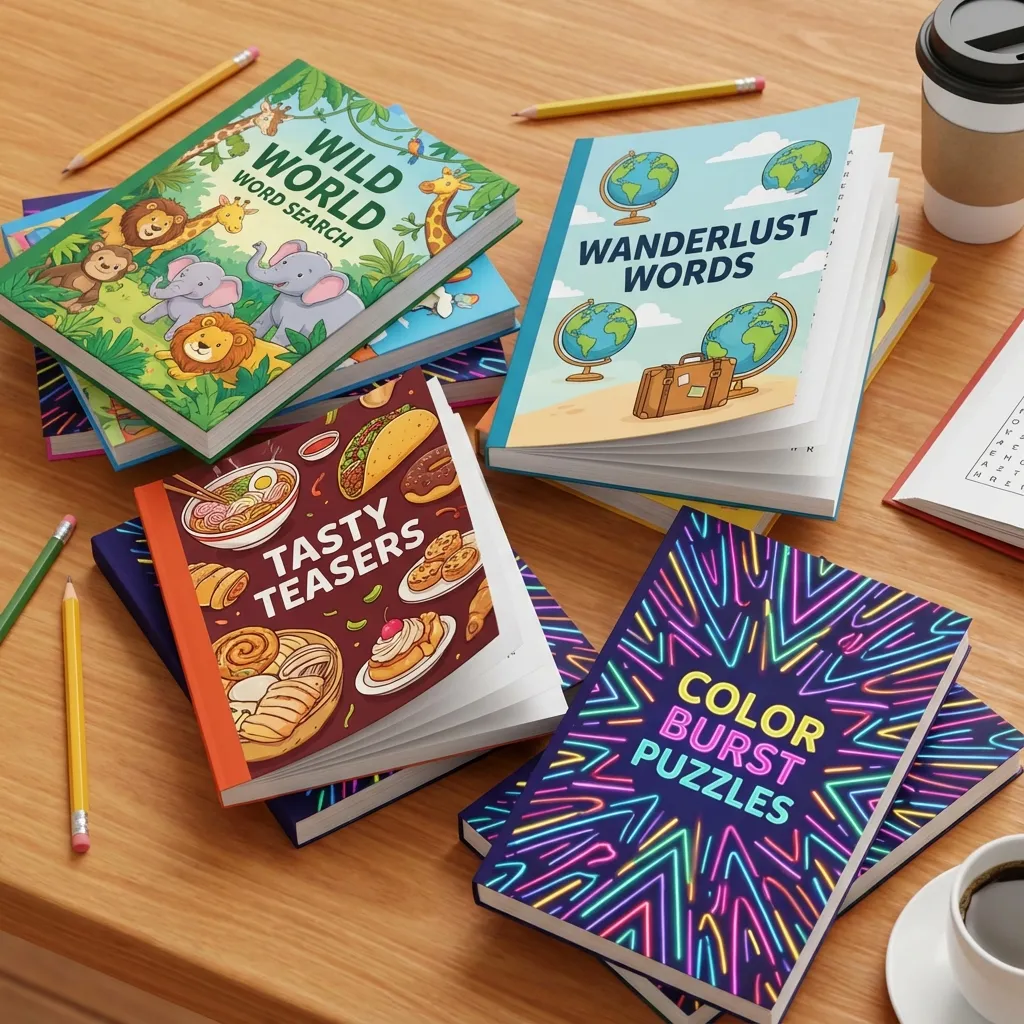

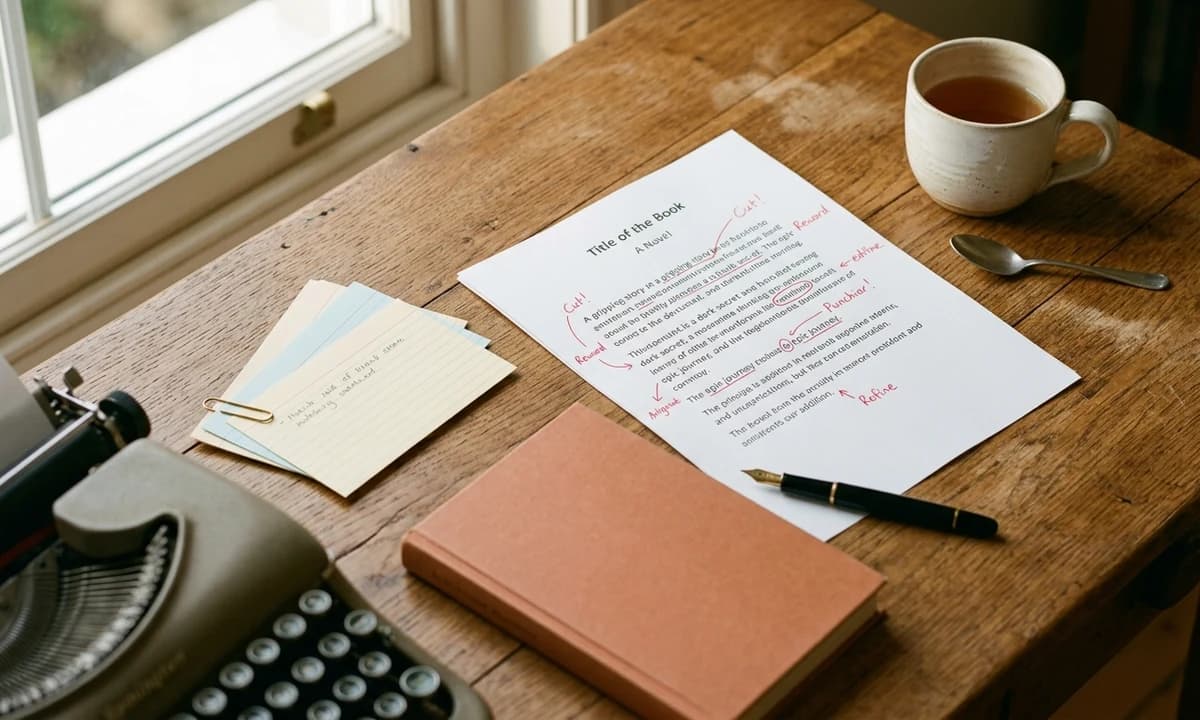
Your cover earns the click. Your description earns the sale. And yet most KDP publishers spend 40 hours on a book and 20 minutes on the description that decides whether anyone buys it. This guide is the exact 4-part framework top authors use to convert Amazon browsers into buyers: hook, premise, escalation, CTA. We cover genre-specific conventions, the HTML formatting that actually works in KDP, the 4000-character strategy, where Amazon\'s "Read more" cut lands, and 5 before/after description rewrites across different genres.
The conversion math nobody mentions
A book getting 1,000 monthly Amazon impressions at a 5% click-through rate sees 50 product-page visits. A weak description converts at 8% to 12% (4 to 6 sales). A strong description converts at 20% to 30% (10 to 15 sales). Same impressions. 2.5x the revenue. Across a 30-book portfolio, the gap between weak and strong descriptions is often $1,000+ per month in pure profit.
Why Most KDP Descriptions Fail
Three fatal patterns appear in 90% of low-converting descriptions:
Failure 1: Feature lists instead of benefits
"This coloring book contains 50 mandala designs in 8.5 x 11 format on single-sided pages" is a spec sheet, not a description. The buyer reads it and thinks "so what". The fix is to translate every feature into the emotional outcome it produces.
Feature (weak):
"50 mandala designs, 8.5 x 11, single-sided pages."
Benefit (strong):
"Escape daily stress with 50 intricate mandalas that quiet your mind in 10 minutes. Full-page designs give you room to breathe. Single-sided so your markers do not bleed through to the next puzzle."
Failure 2: Wall of text
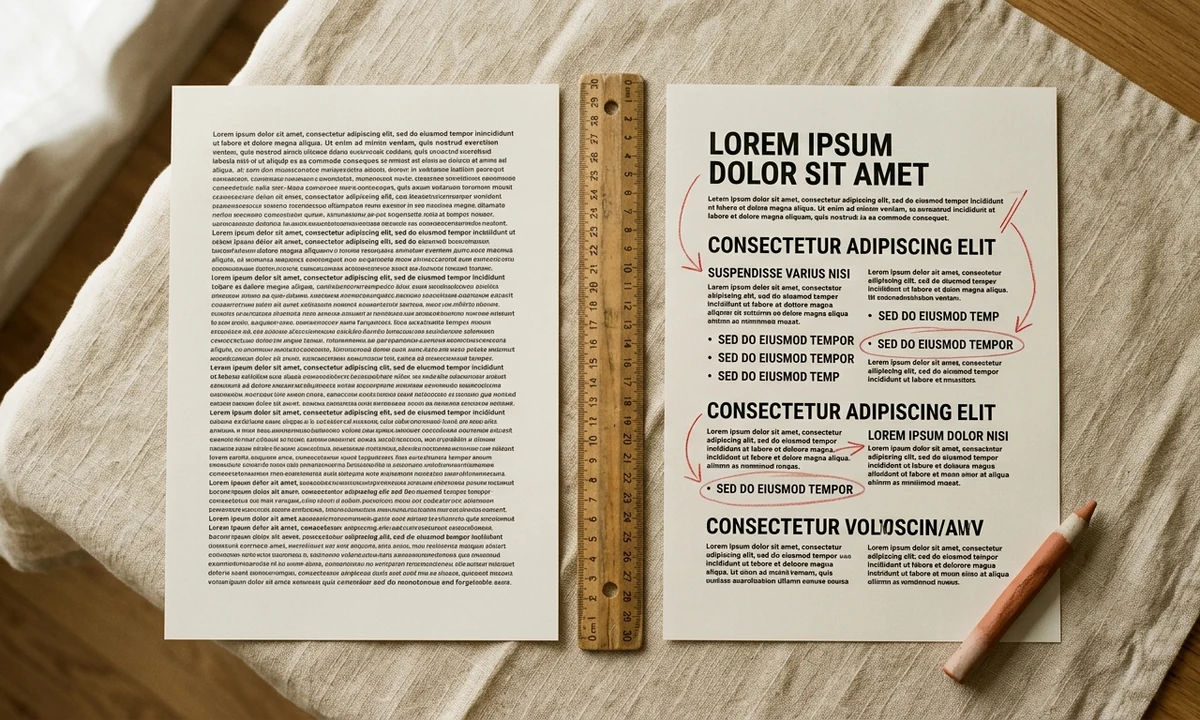
A single 200-word paragraph is unreadable on mobile, which is where 70% of Amazon shoppers browse. Readers skim. If they cannot extract value in 5 seconds, they bounce. Every description should have visible breathing room: short paragraphs, bullet points, and at least one bolded line in the first 4 sentences.
Failure 3: Generic, forgettable copy
"Perfect for all ages." "Great gift." "Hours of fun." These phrases are completely invisible to Amazon shoppers because every cliché-stuffed description uses them. Be specific. "Perfect for adults 50+ who want puzzles in 22-point font" is six times more persuasive than "perfect for all ages".
The 4-Part Framework: Hook, Premise, Escalation, CTA
Every high-converting Amazon book description in 2026 follows the same 4-part structure. The substance changes by genre - the architecture does not.
- Hook (1 to 3 sentences, ~250 characters) - the only section that always sits above the "Read more" cut. Its job is to make the next click obvious.
- Premise (3 to 6 sentences) - the setup. Fiction: world, character, inciting incident. Non-fiction: problem and the transformation you promise. Low-content: emotional state plus practical situation.
- Escalation (3 to 6 bullets) - the stakes, themes, or features rewritten as benefits. This is where bullets earn their keep.
- Call to action (1 to 2 sentences) - explicit direction. "Scroll up and click Buy Now to ___ today." Yes, exactly that direct.
Why this order is non-negotiable
The first 300 to 400 characters of your description are the only ones that appear before Amazon\'s "Read more" cut on mobile. That is roughly your Hook + the first line of your Premise. Most buyers decide before they ever click "Read more". Front-load your strongest copy. The escalation bullets and CTA are for the 30% who scroll - they close the deal you have already opened.
The Hook: Genre-Specific Formulas
Fiction hook formula
Pattern: When [protagonist] [inciting incident], they must [impossible choice] or [terrible consequence].
Thriller example:
"When FBI profiler Emma Cole receives a cryptic message from the serial killer everyone thought was dead, she has 48 hours to decode his twisted game - or her daughter becomes his next victim."
Romance example:
"When chef Mia returns to her small hometown to save her family\'s restaurant, she never expected to face Jake - the man who broke her heart ten years ago and now holds the only key to her future."
Fantasy example:
"On the night before her execution, the kingdom\'s most-wanted thief is offered an impossible bargain: steal back a stolen god or watch every kingdom she has ever known burn."
Non-fiction hook formula
Pattern: Learn how to [desired outcome] in [time frame] without [common objection].
Health example:
"Lose 20 pounds in 90 days - without starving yourself, counting calories, or spending an hour at the gym."
Finance example:
"Build a $10,000 emergency fund in 6 months - even if you are living paycheck to paycheck right now."
Business example:
"Launch a $5,000-a-month side business in 12 weekends - with no employees, no inventory, and no marketing budget."
Low-content hook formula
Pattern: [Emotional state you create] with [specific format] designed for [target audience].
Coloring book example:
"Find instant calm with 50 nature-inspired coloring pages designed for adults who only have 15 minutes between work and bedtime."
Word search example:
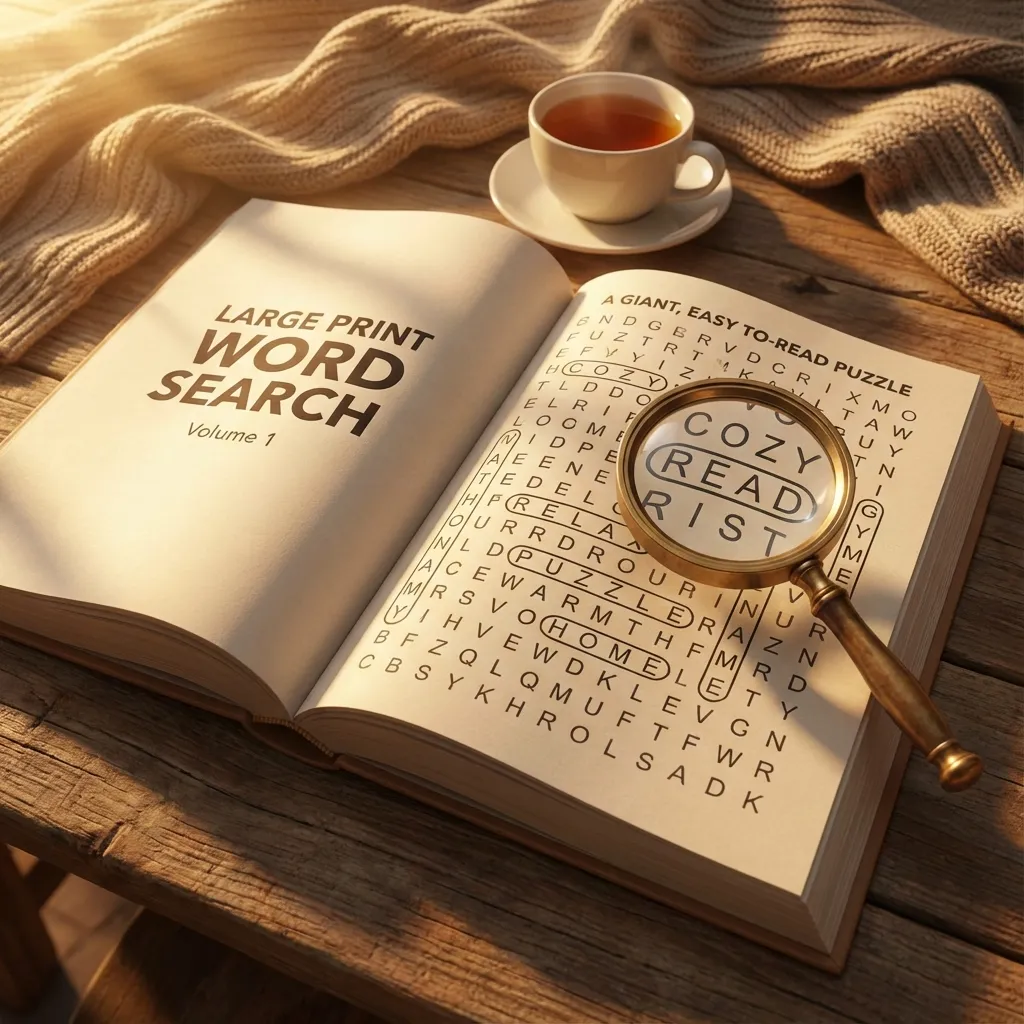
"Keep your mind sharp and your eyes comfortable with 150 large-print word searches in 22-point font - designed for puzzle lovers over 50."
Journal example:
"Build unstoppable confidence with 12 weeks of guided prompts, affirmations, and goal-setting exercises - written for women ready to take control of their next chapter."
A great description needs a great cover behind it
A high-converting description on a weak cover is wasted work. KDPEasy generates print-ready professional covers in under 2 minutes.
Create your coverThe 4000-Character Strategy and Where "Read More" Lands
KDP gives you up to 4,000 characters. Top-converting descriptions in 2026 use roughly 1,400 to 2,600 characters across 250 to 450 words. Going to the full 4,000 rarely helps. Going below 800 looks underdelivered.
Where Amazon\'s "Read more" cut lands
- Mobile (~70% of buyers): truncates at approximately 400 characters
- Desktop: truncates at approximately 600 characters
- Tablet: roughly 500 to 700 characters depending on width
- Implication: your hook plus the first line of your premise are the only guaranteed visible copy. Treat the cut like a paywall.
Above-the-fold optimization
Three rules for the first 400 characters:
- Lead with the hook. No throat-clearing. No "If you are looking for". No author introduction.
- Include the primary keyword once, naturally, in the first 150 characters. This helps the snippet show in search.
- Put one bolded phrase in the first 4 lines. Even without HTML rendering, bold pulls the eye to the most important benefit.
KDP HTML Formatting: What Works, What Does Not
The KDP HTML allow-list
Amazon KDP supports a narrow allow-list of HTML tags. Tags outside the list are silently stripped or break formatting entirely.
| Tag | What it does | Best use |
|---|---|---|
| <b>...</b> | Bold text | 2 to 5 word benefits at the start of bullets |
| <i>...</i> | Italic | Reader testimonials, book titles, soft CTA |
| <br> | Line break | Use <br><br> between paragraphs. Most important tag. |
| <ul><li> | Bulleted list | The Escalation section. 3 to 6 bullets max. |
| <h3>...</h3> | Sub-heading | Use sparingly: "What\'s Inside" or "Perfect For". Large on mobile. |
| <p>...</p> | Paragraph | Optional. <br><br> usually does the same job with less risk. |
Tags that get stripped or break
- <span>, <div> - silently stripped
- <img> - stripped. You cannot embed images.
- <a href> - stripped. No links allowed.
- Inline style attributes - stripped. No colors, font sizes, or backgrounds.
- <h1>, <h2> - stripped or rendered as h3
- Emojis encoded as images - render inconsistently across devices. Use sparingly if at all.
5 Before/After Description Rewrites Across Genres
Example 1: Thriller / Mystery
Before (weak):
"This is a thriller novel about a detective who is investigating a missing person case. The detective has to solve the case before something bad happens. Fans of crime fiction will enjoy this book. It has many twists and turns and is sure to keep you reading."
After (4-part framework):
When her best friend vanishes from a locked apartment, Detective Mara Reyes has 72 hours to find her - or the killer she put away ten years ago will walk free.
The crime scene is clean. Too clean. No prints, no struggle, no body. Just a single Polaroid photograph left on the kitchen table - a picture of Mara as a child, taken on a day she has spent her entire life trying to forget.
As Mara races against the clock, every lead drags her closer to a truth she has buried for two decades. The killer is not just hunting her friend. He is hunting her past.
Readers are calling The Polaroid:
- "A masterclass in suspense" - kept me up until 3 a.m.
- "Twists I never saw coming" - the last chapter is brutal
- Perfect for fans of Karin Slaughter, Tana French, and Gillian Flynn
Scroll up and click Buy Now - just don\'t plan to put it down.
Example 2: Romance
Before (weak):
"A romance novel about two people who meet in a small town and fall in love. There are some challenges they face along the way. Fans of small town romance will love this story about second chances and finding love when you least expect it."
After (4-part framework):
Ten years ago, Jake Calloway broke my heart on a rainy night I have spent every Tuesday trying to forget.
Now I am back in our hometown to save my grandmother\'s failing bakery, and the man who used to kiss me on her front porch is the only banker in town who can approve the loan.
He still smells like cedar and rain. He still looks at me like I am the only thing in the room. And he still has not told me why he disappeared the night before our wedding.
But I have six weeks to save the bakery, and Jake holds the pen.
If you love:
- Second-chance romance with real emotional stakes
- Small-town settings with proper found-family warmth
- Slow burn that ignites at exactly the right moment
- HEA endings, no cheating, no cliffhangers
Scroll up and one-click The Bakery on Maple Street to start reading tonight.
Example 3: Non-Fiction (Health)
Before (weak):
"This is a comprehensive guide to nutrition and weight loss. It covers diet, exercise, and mindset. The book explains many strategies for losing weight. Suitable for anyone who wants to be healthier."
After (4-part framework):
Lose 20 pounds in 90 days - without giving up bread, counting a single calorie, or spending an hour at the gym.
If you are over 40 and your old weight-loss strategies have stopped working, the problem is not your willpower. The problem is that your hormones have changed - and the diet that worked at 25 is actively working against you now.
In The 40+ Reset, Dr. Sarah Chen (board-certified endocrinologist, 12 years of clinical practice, over 3,000 patients) walks you through the same 90-day protocol she uses with patients in her Manhattan practice.
Inside you\'ll get:
- The 5-meal framework that stabilizes blood sugar in 11 days
- The 20-minute workout proven to reset metabolism for women over 40
- The sleep protocol that doubles fat loss without changing your diet
- Real patient case studies with starting weights, ending weights, and exact meal plans
Stop fighting your body. Scroll up and click Buy Now to start your 90-day reset today.
Example 4: Low-Content (Large-Print Word Search)
Before (weak):
"This is a word search book for seniors. It contains 100 puzzles with large print. Great gift for grandparents. Hours of fun for puzzle lovers of all ages."
After (4-part framework):
Keep your mind sharp and your eyes comfortable with 150 large-print word searches in 30-point font - designed specifically for adults over 60.
Most puzzle books use 14-point font that strains your eyes after the second puzzle and themes you stopped caring about in 1995. You want puzzles that actually challenge your brain - without squinting, frustration, or themes that bore you.
What\'s inside:
- 150 carefully-curated puzzles across travel, history, classic films, and nature
- True 30-point font on the grid and 22-point on word lists
- Complete answer key in the back - no peeking until you have earned it
- Generous 8.5 x 11 pages with room to circle finds in ink without crowding
- Lays flat when open so you can solve at the kitchen table without holding the pages
Makes the perfect gift for parents, grandparents, and anyone in your life who deserves a puzzle book that respects their eyes.
Scroll up and click Buy Now to start solving today.
Example 5: Children\'s Picture Book
Before (weak):
"A children\'s book about a brave little fox who goes on an adventure. With beautiful illustrations. Perfect for bedtime reading. Kids will love this story about friendship."
After (4-part framework):
When the moon goes missing from the night sky, little Mira Fox sets out to bring it back - and learns that the bravest thing in the world is asking for help.
Through a forest of glowing fireflies and across a river of starlight, Mira meets a grumpy bear, a forgetful owl, and a sleepy rabbit who all believe they are too small or too tired to help. But Mira knows something they do not.
The Night Mira Caught the Moon is a bedtime story about courage, kindness, and the quiet power of asking for help - perfect for children ages 3 to 7 who are learning that bravery doesn\'t mean doing everything alone.
Why parents and kids love it:
- 32 hand-illustrated pages in warm watercolor
- Gentle bedtime rhythm that calms even the most wide-awake reader
- Teaches asking for help as a quiet form of strength
- Repeated reading rewards - 12 hidden friends to find in the illustrations
Scroll up and add The Night Mira Caught the Moon to your bedtime shelf tonight.
Run the framework on every new book
Once your description is dialed, the only remaining lever is the cover thumbnail. Generate KDP-ready professional covers in minutes with KDPEasy.
Create your coverPower Words That Carry Their Weight
Power words are not magic - they are shortcuts to emotional states the buyer is already in. Use them sparingly. One per paragraph maximum.
Curiosity and discovery
Discover, unlock, reveal, untold, hidden, secret, master. Strong for non-fiction transformation hooks. Avoid in romance and thriller - too marketing-adjacent for fiction.
Urgency and momentum
Today, now, instantly, immediately, finally, the last time. Strong in CTAs. Weak in hooks where they sound like infomercial copy.
Specificity (the strongest category)
Real numbers always beat vague descriptors. "50 designs" beats "many designs". "30-point font" beats "easy-to-read print". "90 days" beats "a few months". "3 patients" beats "some clients". Specificity is the single highest-leverage edit you can make to any description.
A/B Testing Your Description
KDP does not offer real split testing. You can simulate it with sequential testing: change one element, run for 14 to 28 days, measure, repeat.
What to test in order
- The hook. Single highest-leverage element. Test 2 to 3 hooks before touching anything else.
- The bullet count and order. 3 bullets vs 5 vs 6. Lead with different benefits.
- The CTA wording. "Scroll up and click Buy Now" vs softer "Start reading tonight" vs urgency-driven "Limited first printing".
- The first sub-heading. "What\'s inside" vs "Why readers love it" vs "Perfect for".
Track sessions-to-orders in your KDP dashboard. A 3% to 5% conversion-rate lift on a $300/month book is $36 to $60 in pure profit per month, recurring forever. Description optimization is the highest ROI work in KDP because every dollar earned later is leveraged on the same upfront effort.
Common Description Mistakes
Keyword stuffing
Cramming 12 keyword variations into your description hurts you twice: it tanks readability, and Amazon\'s algorithm has not used the description field as a meaningful ranking factor since 2020. The 7 keyword slots and the title carry that load. The description is for conversion.
No CTA
Ending the description with the last bullet leaves the buyer in a passive state. Always close with an explicit instruction: "Scroll up and click Buy Now." Direct is good. Cute is not.
Ignoring mobile preview
70% of Amazon shoppers are on mobile. If you cannot read your description comfortably on a phone screen, your description is broken. Always preview the listing on a phone before clicking Publish.
Copying competitor descriptions
Study competitors for structural insight. Never copy verbatim. Amazon\'s content team flags duplicate descriptions and it screams unprofessional to a careful buyer.
Final Takeaway
Great covers earn the click. Great descriptions close the sale. Master both and you outperform 80% of your category on the same Amazon impressions.
Run the 4-part framework on every book. Treat the hook like a paywall. Use HTML formatting to make the page scannable on mobile. Test relentlessly. A 5% conversion lift on a 30-book portfolio is real money - quietly recurring, every single month, for years.
Pair this framework with the income realities in our honest KDP income guide and the front-end discovery system in our niche research system, and you have the full conversion stack: pick the right niche, write the right description, then earn from the same traffic everyone else is wasting.
A FEW MORE ANSWERS
Frequently asked questions
The KDP description field caps at 4,000 characters. Top-converting descriptions in 2026 use roughly 1,400 to 2,600 characters across 250 to 450 words. Going to the full 4,000 rarely helps because Amazon truncates everything past about 400 characters behind a "Read more" toggle on mobile and 600 characters on desktop. Your job is to make the first 300 characters so strong that the click on "Read more" is irrelevant - the buyer has already decided.

ABOUT THE AUTHOR
Danielle Okonkwo
Marketing & Growth Lead at KDPEasy. Danielle is a published author with 12+ titles on Amazon KDP and a former book blogger. She draws on hands-on publishing experience and years of testing what works in the KDP marketplace.
Meet Danielle