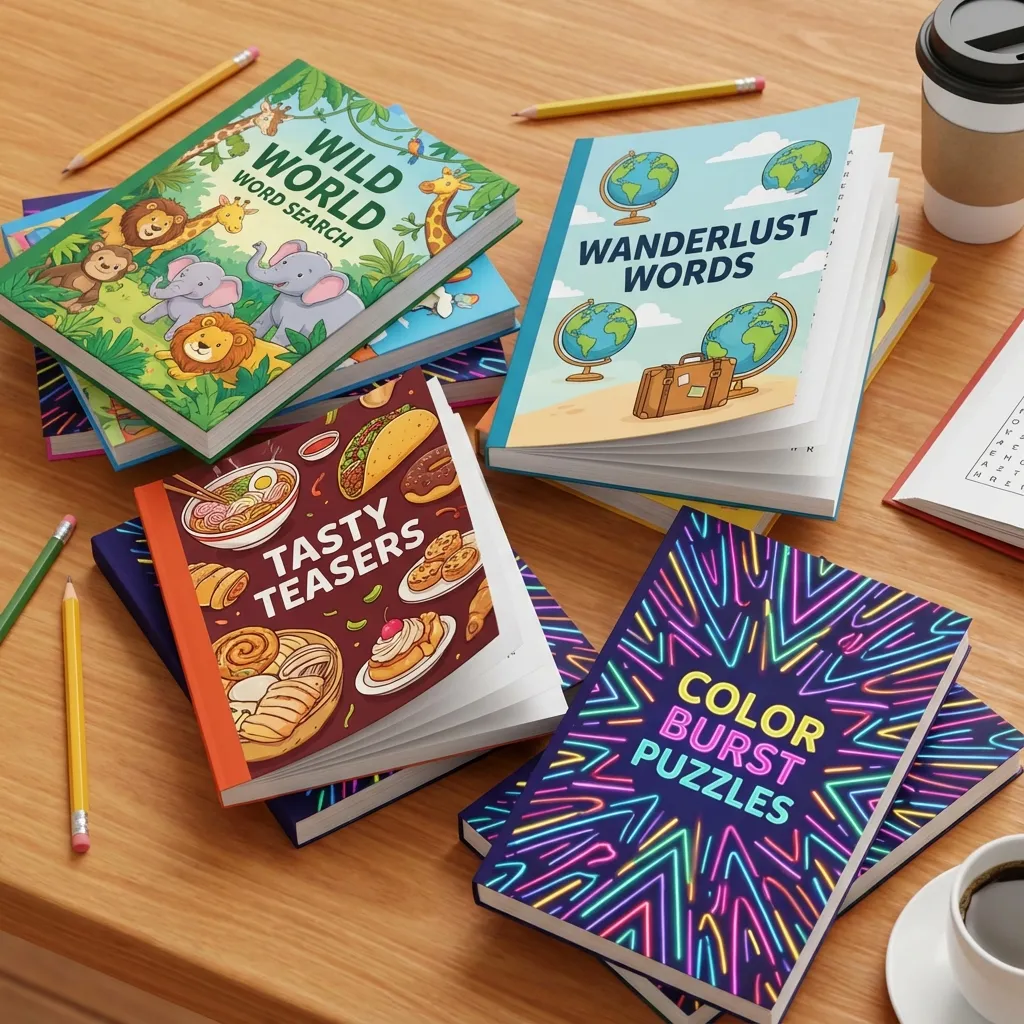

Kids word search books are one of the cleanest opportunities on KDP. The buyer is motivated (parents, grandparents, teachers buying gifts or learning aids), the market is large, and most published books in the category are obviously made by someone who has not held a 7 year old's attention for 10 minutes. This guide breaks down the design, theme, and listing decisions that separate kids word search books that sell from kids word search books that do not.
What changes when the buyer is a parent
- Filters by age. The cover must state the age range or it gets filtered out at the search stage.
- Filters by quality. Parents read the Look Inside. Sloppy puzzles get spotted in three seconds.
- Buys for educational value. "Builds vocabulary" or "improves focus" beats "100 puzzles" in many sub-niches.
- Buys often as a gift. 50 to 60% of kids puzzle book purchases are gifts. The cover has to look gift-worthy.
- Repeat customer. The same parent buys for siblings, growing children, and as bring-along travel books.
Age-by-age design system
The fastest way to fail in this niche is to publish "kids word search 4 to 12" because no kid age range that wide actually works. A 5 year old and a 12 year old need completely different books. Here is the breakdown I use.
Ages 4 to 6 (preschool, kindergarten, early 1st grade)
At this age, the buyer's job is to get the kid to associate the book with positive feelings. The puzzles are almost beside the point. Format choices.
- Grid size. 6x6 to 8x8 maximum. A 6x6 with 4 words is plenty.
- Word count. 4 to 6 simple words per puzzle.
- Word length. 3 to 5 letters. CAT, DOG, SUN, TREE, FISH, STAR.
- Directions. Horizontal left to right and vertical top to bottom only. No diagonals, no reversed.
- Font. 24 to 28 point grid letters. Sassoon Primary, Arial Rounded, or a clean child-reader font. Uppercase only.
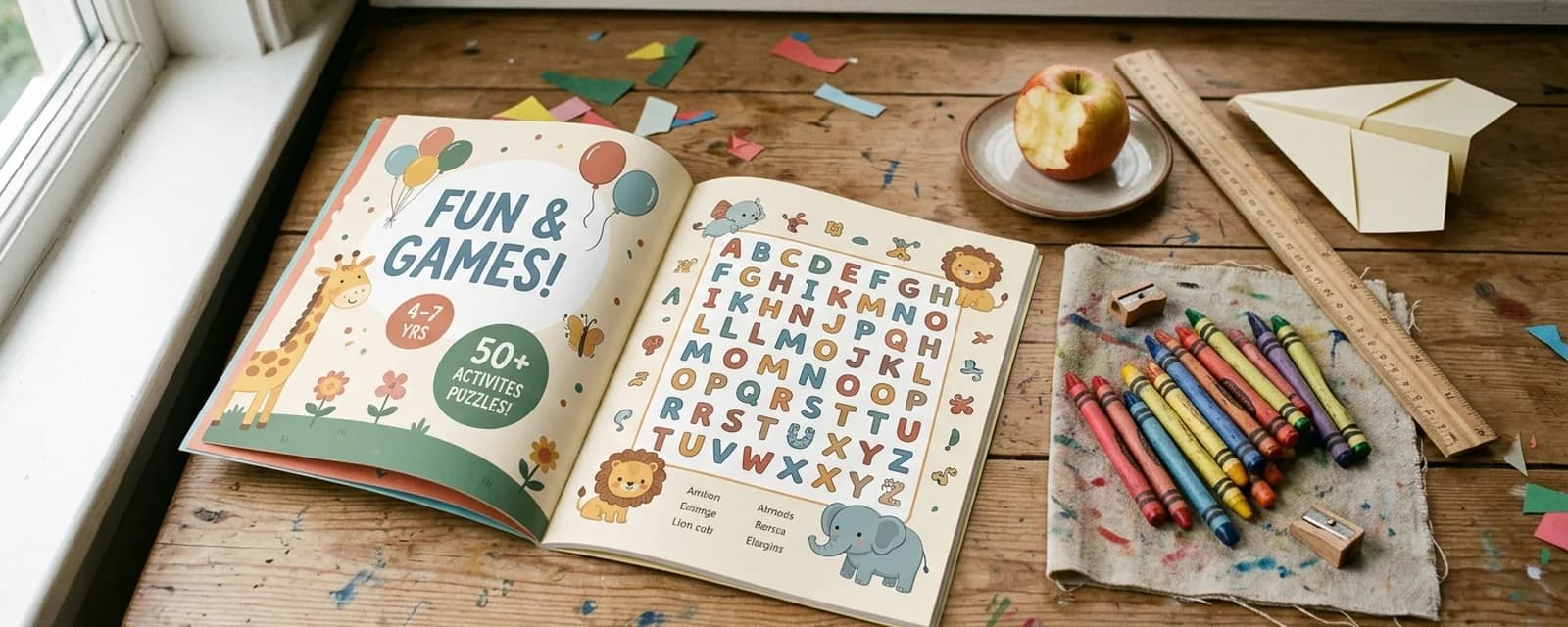
- Word list format. Each word in the list paired with a small illustration. The illustration is the difference between "we returned it" and "she did all of them".
- Color. Interior color is non-negotiable for this age. Price accordingly ($8.99 to $11.99).
- Total puzzles. 25 to 35. Any more and the book feels like a worksheet stack, which is the wrong vibe.
- Bonus pages. 2 to 4 coloring pages between puzzle clusters. A "first puzzle" achievement page at the front. A completion certificate at the back.
Ages 7 to 9 (2nd to 4th grade)
This is the largest age range by sales volume. The kid is now competent enough to enjoy actual puzzling, but still benefits from age-appropriate guardrails.
- Grid size. 10x10 to 12x12.
- Word count. 8 to 12 per puzzle.
- Word length. 4 to 8 letters. Mix simple (CAT) and slightly bigger (RABBIT, GUITAR).
- Directions. Horizontal, vertical, and one forward diagonal (top-left to bottom-right). Hold off on reversed words until the back third of the book.
- Font. 18 to 22 point grid, 14 point word list. Arial, Verdana, or Century Gothic.
- Color. Black and white interior is fine. Save color for the cover. Price the book at $6.99 to $7.99.
- Total puzzles. 50 to 70.
- Illustrations. Optional small theme illustrations at the top of each puzzle page. A consistent character mascot across the book works well (the "Animal Buddy" who pops up on every page with a fact).
- Educational layer. Add a 1 sentence "fun fact" with each puzzle theme. "Did you know? A blue whale's heart is the size of a small car." This is the parent-pleasing detail that justifies the price.
Ages 10 to 12 (5th to 7th grade)
These kids do not want to feel like they are using a baby book. The design moves toward adult formatting with curriculum content.
- Grid size. 13x13 to 15x15.
- Word count. 12 to 18 per puzzle.
- Word length. 5 to 12 letters. Lean longer for educational themes (PHOTOSYNTHESIS, AMENDMENT).
- Directions. All 8 directions, but cap diagonal/reversed at about 40% of placements.
- Font. 14 to 16 point grid, 12 point word list. Arial or Times New Roman.
- Color. Black and white interior. Color cover.
- Total puzzles. 75 to 100.
- Illustrations. Minimal. Stylized header art is fine; cute mascots feel babyish at this age.
- Educational layer. Fact boxes get more substantive. A 3 to 4 sentence factoid per puzzle, optionally aligned to curriculum.
Themes that actually sell
Theme is the second-biggest decision after age. Some themes have permanent demand. Others spike seasonally. A few are reliably weak and best avoided as standalone books.
Evergreen themes (year-round demand)
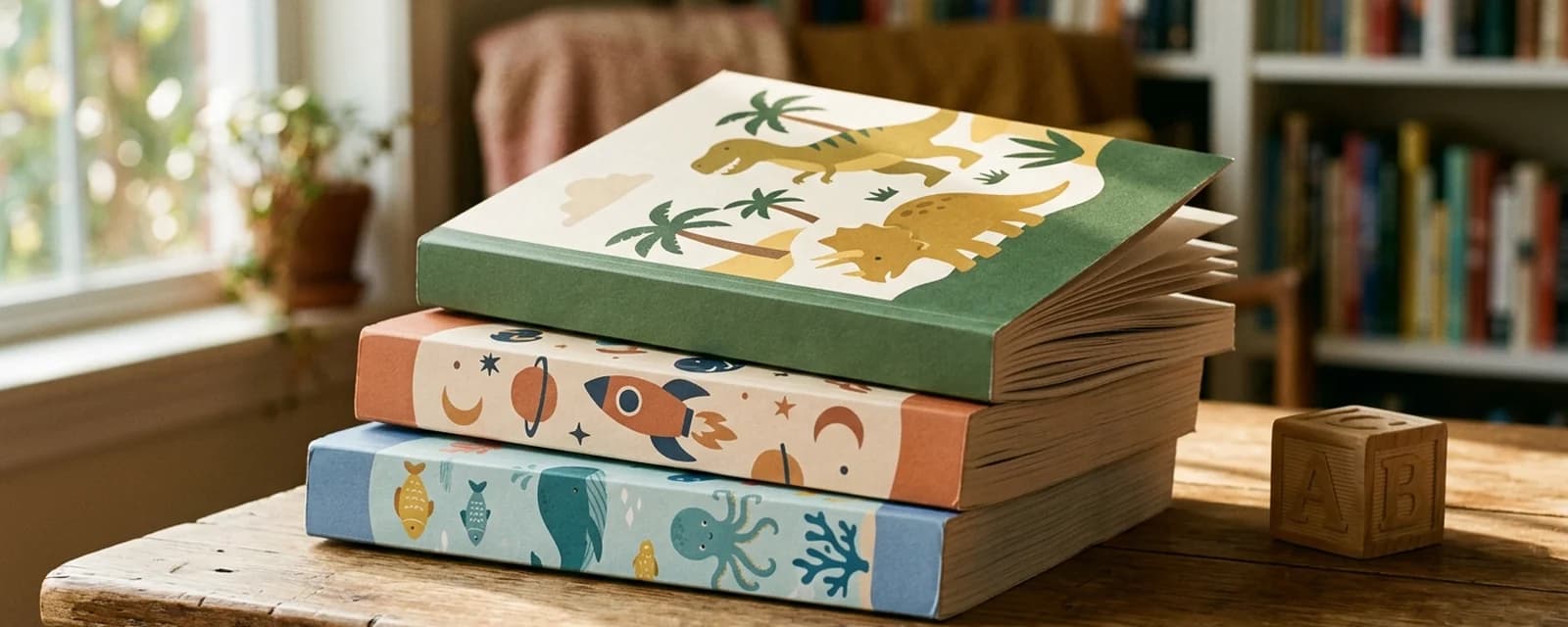
- Animals. Especially specific animal sub-themes. "Dinosaur word search" outsells "animal word search" by a wide margin because the kid (and the parent searching) has a specific obsession. Other strong sub-themes: ocean animals, farm animals, jungle animals, zoo animals, dog breeds, horse breeds.
- Sports. Soccer, baseball, basketball, swimming, gymnastics. Specific is better than generic. A "soccer word search" beats "sports word search".
- Space. Planets, astronauts, rockets, the solar system, constellations. The kid who likes space really likes space.
- Vehicles. Cars, trucks, trains, planes, construction equipment. Strong with younger boys especially.
- Sight words / spelling. Curriculum-aligned. Sells year round but spikes hard at back-to-school.
- Fantasy. Unicorns, dragons, mermaids, fairies. Strong with younger girls.
Seasonal themes (revenue spikes)
- Halloween (Sept to Oct). Monsters, pumpkins, costumes, trick-or-treat words. Sales spike in early October.
- Christmas (Oct to Dec). Santa, reindeer, snowmen, holiday traditions. The single biggest sales spike of the year for kids puzzle books.
- Valentine's Day (Jan to Feb). Friendship, hearts, kindness. Smaller spike but very low competition.
- Easter (Feb to Apr). Bunnies, eggs, spring animals.
- Summer (Apr to Jul). Beach, camping, summer vacation, ice cream. Strong with the road-trip activity book buyer.
- Back to school (Jul to Sep). School supplies, classroom words, curriculum vocabulary, sight words.
Educational themes (homeschool and teacher market)
- Sight words by grade. Dolch word lists, Fry word lists.
- Spelling lists. Common Core spelling, state-specific standards.
- Science vocabulary. By topic (weather, plants, animals, space, the human body).
- US states and capitals. Geography evergreen.
- Math terms. Surprisingly low competition.
- Historical events. Civil War, US presidents, ancient Egypt - period-specific is better than generic "history".
Generate age-appropriate puzzles in minutes
Pick the age, the theme, and the grid size. The KDPEasy word search creator handles layout, solutions, and KDP-ready exports.
Try the generator freePicture-supported layouts (the secret weapon for ages 4 to 8)
The single highest-impact design choice for kids word search books in the younger age groups is illustrations beside the word list. The standard kids word search book on Amazon has a grid and a plain word list. A book that adds a small illustration beside each word (a tiny line drawing of a cat next to CAT, a tiny dinosaur next to T-REX) wins on three measures simultaneously.
First, kids who cannot reliably read the word can still solve the puzzle by matching the picture to the letters. This is critical for ages 4 to 6 where reading is in development. Second, the parent flipping through Look Inside sees the illustrations and makes the immediate "this is a real kids book" judgment. Third, the perceived value goes up enough to justify a $1 to $2 price premium.
Practical implementation. Source consistent line-art illustrations (royalty-free vectors from Vecteezy or Freepik, or AI-generated with a consistent style). Place each illustration 0.4 inches square beside its word in the list. Use the same illustration set across all volumes in your series so the visual language stays consistent. Do not over-illustrate the grid itself - busy backgrounds make the puzzle harder to scan.
Cover conventions that signal parent-buyer trust
The cover does 80% of the conversion work. Kids word search book covers have specific conventions that buyers expect. Breaking them feels off in a way that costs sales.
Required elements, in priority order.
- Age range. "Ages 6 to 8" or "For Kids 4 to 6", visible in the top third or as a corner badge. Parents filter by age. If this is missing, your book is invisible to a large share of buyers.
- Theme statement. "Dinosaur Word Search" or "Ocean Animal Puzzles" - clear, specific, large enough to read at thumbnail size.
- Puzzle count. "75 Fun Puzzles" or "100+ Puzzles for Kids". Pre-answers "is this enough book for the price?".
- Educational badge (optional but high-impact). "Builds Vocabulary", "Boosts Concentration", "Screen-Free Fun". One short tagline that gives the parent a reason to buy beyond entertainment.
- Theme illustration. A central illustrated character or scene matching the theme. For ages 4 to 8, lean cartoon-friendly. For ages 9 to 12, lean a bit more sophisticated (modern flat illustration or stylized photo).
Color choices. Primary colors (red, blue, yellow) work for ages 4 to 7. Secondary and tertiary palettes (teal, orange, purple) work for 8 to 10. By 11 to 12 you want something closer to YA book design - cooler tones, less cartoon. A common mistake is using the same color treatment across all age tiers in a series - the older tier covers should visibly read as "for older kids".
For more on the cover side specifically, our best KDP cover generator tools guide covers the practical tooling. For kids-book-specific cover work, the marketing KDP picture books guide has parallel insights that translate directly.
Pricing kids word search books
| Age range | Page count | B&W price | Color price | Typical royalty |
|---|---|---|---|---|
| Ages 4 to 6 | 40 to 60 | $5.99 to $6.99 | $8.99 to $11.99 | $1.80 to $3.00 |
| Ages 7 to 9 | 80 to 100 | $6.99 to $7.99 | $9.99 to $11.99 | $2.40 to $3.20 |
| Ages 10 to 12 | 100 to 120 | $7.99 to $8.99 | $10.99 to $12.99 | $2.80 to $3.60 |
Two pricing moves to use. First, the launch discount. Drop volume 1 to $4.99 for the first 7 to 10 days to build sales velocity, then return to your target price. Second, the gift edition. A hardcover version of your best seller priced at $14.99 to $19.99 catches gift buyers and clears margin even at lower volume.
The listing copy for the parent buyer
Parents skim. Your description has about 8 seconds before they decide to keep reading or scroll on. The hook (first 2 lines, visible before "see more") has to do four things: name the age range, name the theme, name a benefit, and name a use case.
Strong hook example:
"75 dinosaur-themed word search puzzles designed for kids ages 6 to 8. Builds vocabulary, sharpens focus, and turns screen time into screen-free time on car trips, rainy afternoons, and quiet weekends."
Weak hook:
"This is a fun word search puzzle book with lots of puzzles to enjoy."
After the hook, use a short bullet list of features framed as benefits to the parent and the child. Each bullet should answer a buyer question they have not asked out loud.
- "Age-appropriate vocabulary" answers "is this the right level for my kid?"
- "Large 20 point font with clear letters" answers "can my kid actually read this?"
- "75 puzzles with full answer key" answers "is this enough book? Can we check answers?"
- "Perfect for ages 6 to 8 / 1st to 3rd grade" answers the grade-level filter.
- "Great gift for birthdays, holidays, or just because" answers the gift buyer.
- "Builds vocabulary, concentration, and pattern recognition" answers "is this just entertainment or does it teach something?"
Mistakes that quietly hurt kids word search sales
The common kids word search mistakes
- One book for "ages 4 to 12". No format works for that range. Split into age tiers.
- Vocabulary mismatch. Putting REFRIGERATOR in an ages 4 to 6 book. Read the words out loud to a target-age kid before publishing.
- Tiny grid letters. 12 point in an ages 4 to 6 book. Should be 24 to 28.
- Solutions on the back of puzzle pages. Kids peek. Solutions belong in a dedicated section at the back.
- Missing age range on cover. Invisible in search filters. Always include.
- Generic stock photo covers. Custom illustrated covers outsell stock by 50% or more in this category.
- Themes that the kid is supposed to like. Themes that the kid actually likes (dinosaurs over "animals", soccer over "sports") win.
- No Look Inside enabled. Parents will not buy a kids book they cannot preview.
- Color interior at black-and-white price. The color print cost will eat your royalty. Raise the price or stay B&W.
- One title, one volume. Series sell. Plan 3 to 5 books minimum.
The 10-day launch plan for kids word search
Once you have the design system above, the actual production cycle is fast. Here is the cadence I run for a new kids word search series.
- Day 1. Niche selection. Pick age range + theme combination using competitor analysis on Amazon.
- Day 2. Word list creation. 50 to 100 puzzles' worth of theme-appropriate words, hand-checked for age.
- Day 3 to 4. Puzzle generation. Use the KDPEasy word search creator or similar to generate grids with correct age-tier settings.
- Day 5. Interior design. Add front matter, instructions, theme illustrations, solutions section.
- Day 6. Cover design. Age badge prominent, theme clear, puzzle count visible.
- Day 7. Keyword research and listing copy. Title formula, 7 backend keywords, hook-first description.
- Day 8. Upload to KDP. Submit for review. Order a proof copy.
- Day 9. Proof review. Check actual print quality, font legibility at trim size.
- Day 10. Publish all 3 to 5 volumes in the series simultaneously. Enable the series page. Click Request a Review on every order from day 5 onward.
Publish your first kids word search book this weekend
The KDPEasy generator handles the grid, the layout, and the print-ready KDP files. Add the cover, the listing copy, and you are live.
Start free with KDPEasyRevenue potential, realistic version
A single competitive kids word search book in a defined niche earns $50 to $200 per month after the launch ramp. That floor by itself is not life-changing. But the kids word search category compounds well across a series and across age tiers. Here is the realistic curve for a publisher running this playbook on a tight niche (e.g., "dinosaur word search for kids").
- 3 books, all ages 6 to 8, one theme. $300 to $600 per month at month 6.
- 9 books: 3 themes x 3 age tiers (4-6, 7-9, 10-12). $1,200 to $2,500 per month at month 12.
- 15+ books across multiple themes and ages. $2,500 to $5,000+ per month at month 12 to 18.
The seasonal Christmas spike on kids puzzle books typically adds 50 to 100% to monthly sales in November and December. That single spike often pays for the rest of the year's marketing spend on its own.
Pulling it together
Kids word search books reward publishers who care about the kid as much as the puzzle. The age-appropriate format, the parent-pleasing cover signals, and the theme that the kid actually wants - those are the three levers. Everything else is execution. Pair this design system with the marketing playbook in our word search KDP marketing strategy guide, calibrate difficulty using our word search difficulty levels guide, and you have a complete system. For broader kids book context, our kids activity book KDP guide covers adjacent formats, and the preschool workbook guide goes deep on the under-7 audience specifically.
The parents are looking for good books for their kids. Most of what they find on Amazon is not great. Make the version that is.
A FEW MORE ANSWERS
Frequently asked questions
Word searches work from age 4 if you scale them right. Ages 4 to 6 need 6x6 grids, 4 to 6 words at 3 to 5 letters, picture clues, and only horizontal and vertical placement. Ages 7 to 9 can handle 10x10 to 12x12 grids with 8 to 12 words and one diagonal direction. Ages 10 to 12 are ready for 13x13 to 15x15 grids, all 8 directions, and curriculum vocabulary. Most kids word search books fail because the publisher used adult formatting and slapped "for kids" on the cover.

ABOUT THE AUTHOR
Danielle Okonkwo
Marketing & Growth Lead at KDPEasy. Danielle is a published author with 12+ titles on Amazon KDP and a former book blogger. She draws on hands-on publishing experience and years of testing what works in the KDP marketplace.
Meet Danielle