
The large print senior word search shelf on Amazon is one of the few KDP niches where craftsmanship still beats volume. Buyers can tell within three swipes of the Look Inside preview whether a book respects aging eyes or just scaled up a generic grid by 20 percent. Get the typography, grid density, theme, and gift framing right and a single title earns royalties for years. Get any one of those four wrong and the book gets buried in one-star reviews from caregivers who paid extra expecting better. This is the complete 2026 design and listing playbook.
What large print actually means on Amazon in 2026
Amazon does not police the phrase "large print" on KDP listings, which is exactly why so many titles slap it on a 14pt grid and call it done. Buyers know. The phrase carries an implicit standard that maps roughly to the National Library Service definition used for talking books and accessible print:
- Standard print: 10 to 12pt body text.
- Large print: 16 to 18pt minimum, sans-serif preferred.
- Extra large print or jumbo print: 20pt and above.
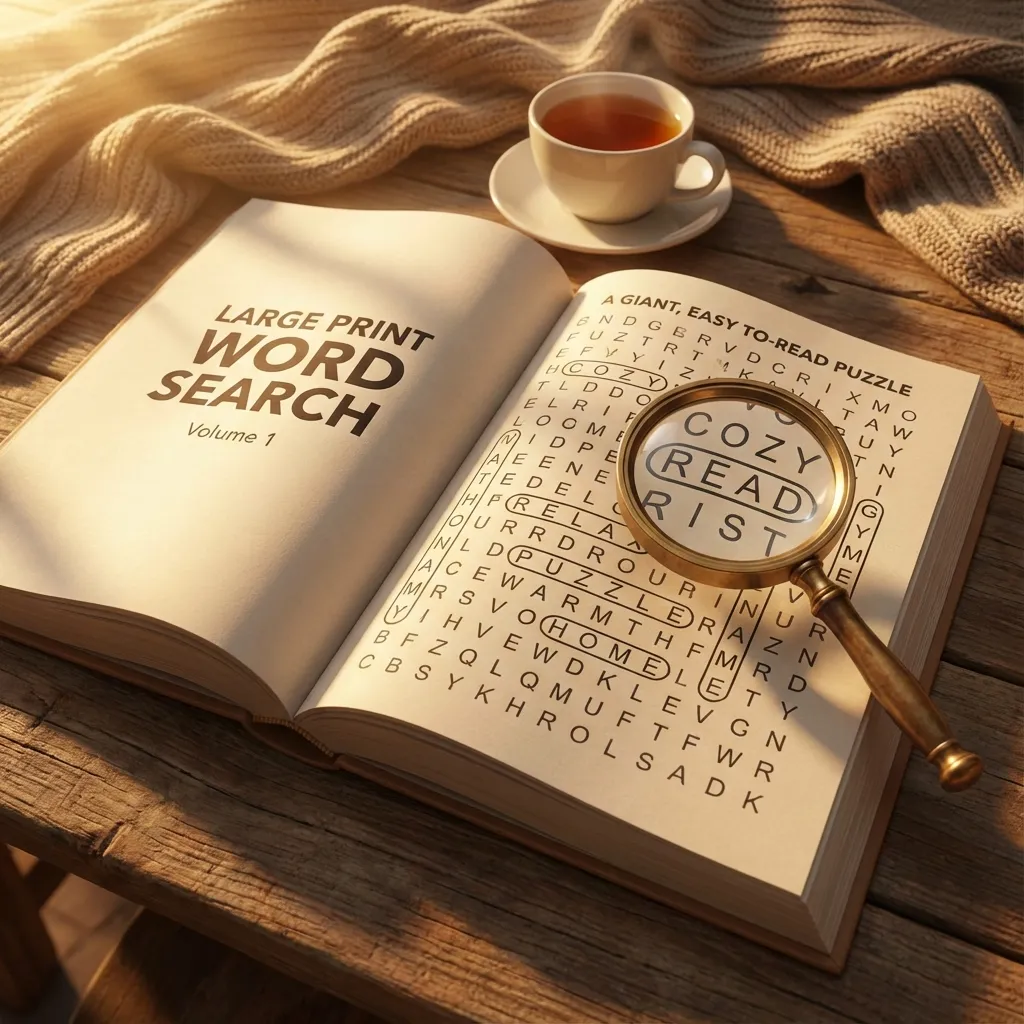
- Senior word search expectation: 18 to 22pt for grid letters because each letter is read in isolation, not as part of a flowing line.
If your grid is 14pt, the listing is misleading. If it is 22pt or above, you can comfortably call it large print or even jumbo print and stand behind the claim.
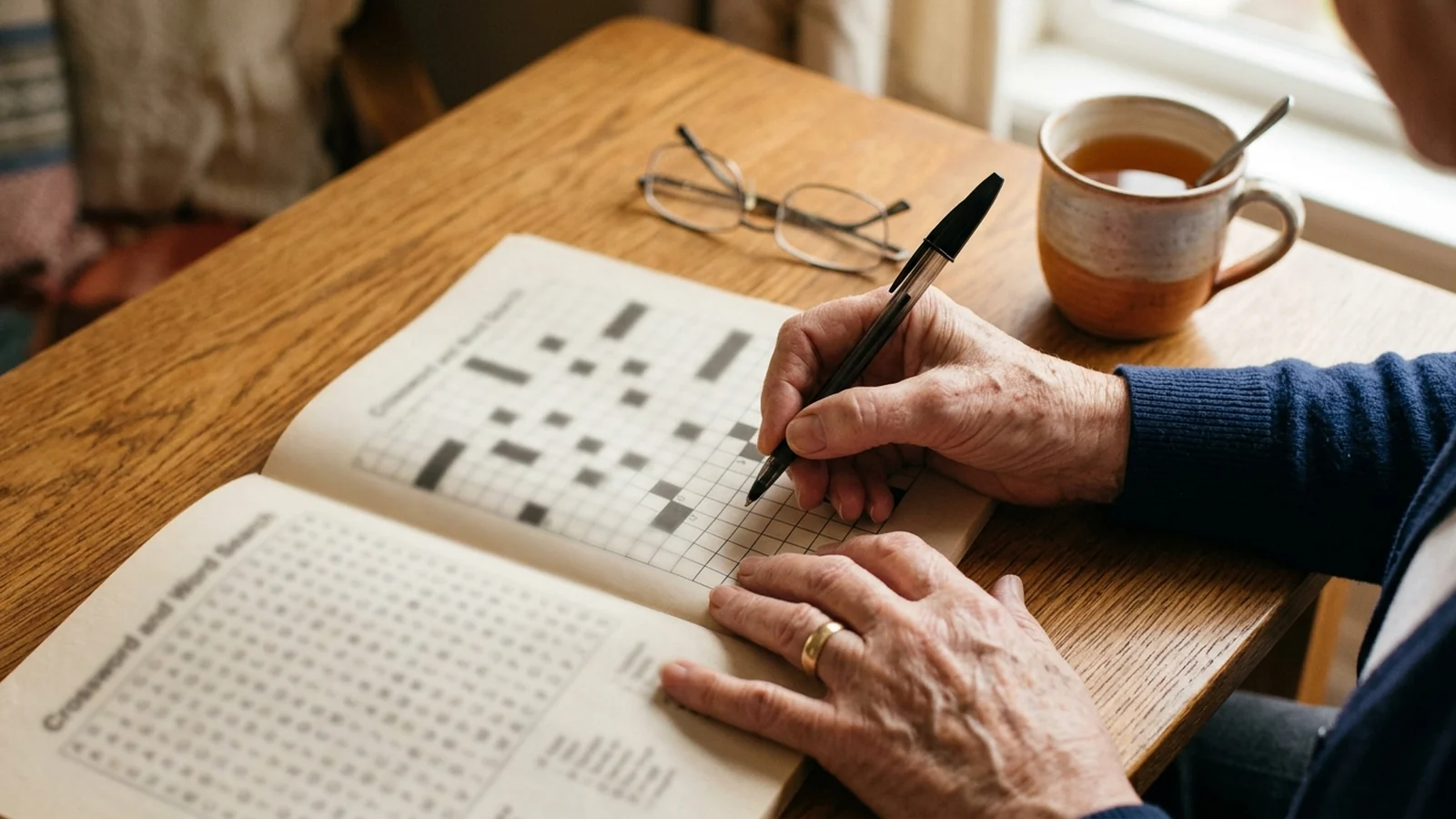
Why the senior puzzle niche is structurally underserved
Three forces converge to make this niche unusually profitable, and most KDP publishers ignore at least two of them.
1. A demographic wave that only gets bigger
Roughly 10,000 Americans cross age 65 every single day through the end of this decade. Vision changes affect about 90 percent of people over 65, which means large print is not a preference, it is functionally required. The market is not just growing, it is graduating in lockstep with the daily Census tick.
2. The 40 percent gift purchase effect
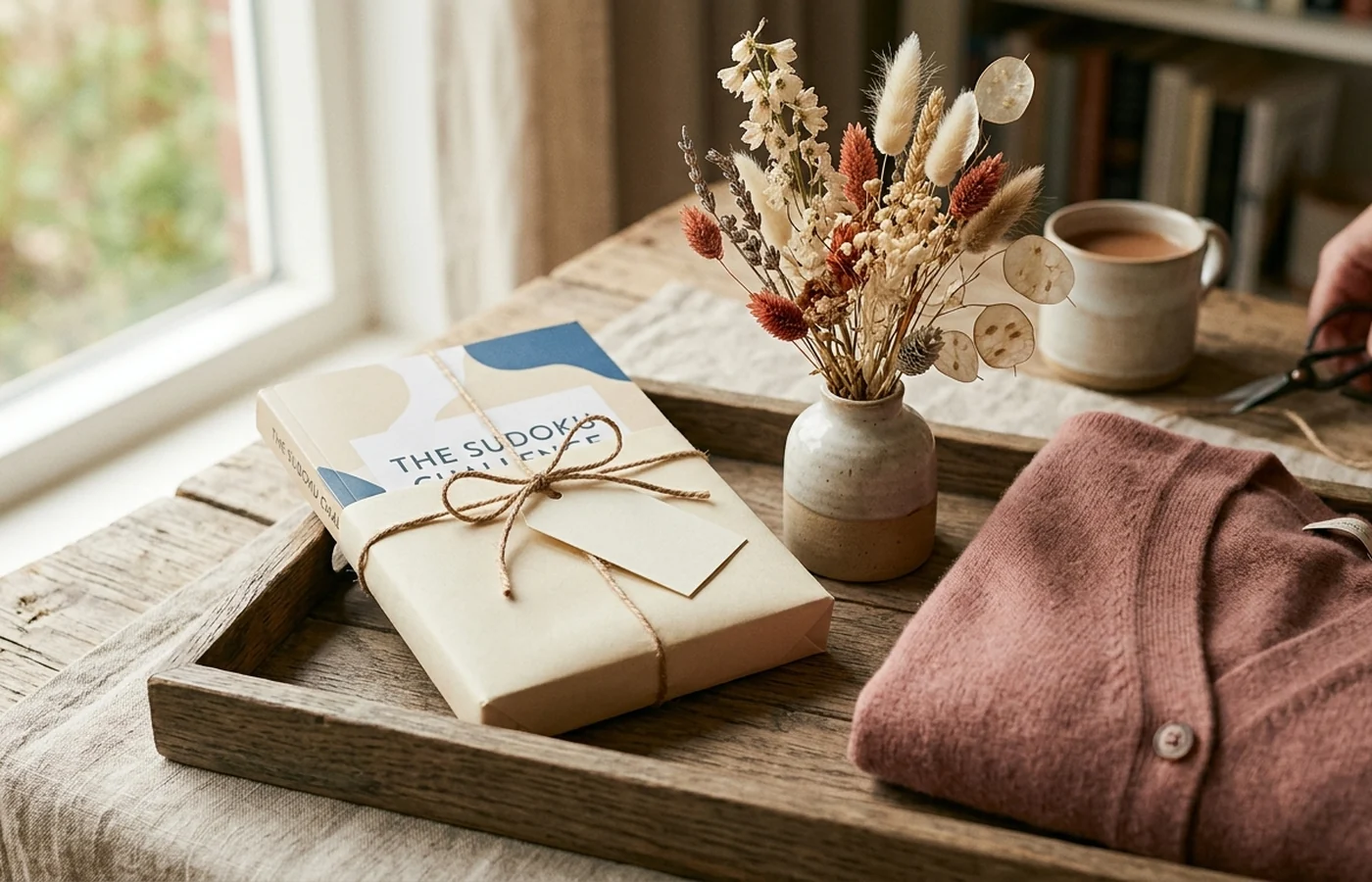
About four in every ten senior puzzle book sales are gifts purchased by adult children. Gift buyers behave differently from solo buyers: they spend more, they read the description more carefully, and they treat the book cover as a stand-in for "did I think about this enough?" That is why a $9.99 senior puzzle book with a calm, gift-feeling cover often outsells a $5.99 functional one. The buyer is not optimizing on dollars per puzzle.
3. Hard-to-fake craftsmanship
Most generic word search publishers cannot follow accessibility specifications consistently across 60 puzzles. The publishers who can build a moat. A reader who finds a series they trust on font, theme, and layout will buy every volume. Repeat purchase rates in this niche run 60 to 80 percent for a well-built series, far above the 20 to 30 percent norm for general puzzle books.
Build a large print word search book the right way
KDPEasy generates accessible, senior-ready puzzle interiors with the correct grid font, word count, and layout out of the box.
Start freeThe exact typography specification
Treat this table as a literal copy paste into your generator settings. Every value has been pressure tested against the top 50 large print word search titles on Amazon and the design notes published by the American Foundation for the Blind for low-vision print.
| Element | Minimum | Recommended | Font |
|---|---|---|---|
| Puzzle grid letters | 18pt | 20 to 22pt | Arial or Helvetica |
| Word list | 16pt | 18pt | Arial or Verdana |
| Puzzle title | 18pt | 22 to 24pt | Arial Bold |
| Instructions page | 14pt | 16pt | Arial |
| Page numbers | 12pt | 14 to 16pt | Arial |
| Solution grid letters | 14pt | 16 to 18pt | Arial |
Why sans-serif always wins here
Serif fonts add small ornamental strokes at the terminals of each letter. Those strokes help in dense flowing text by giving the eye a horizontal line to track. In a puzzle grid each letter is isolated, so the serifs become visual noise that competes with neighboring letters. Arial, Helvetica, and Verdana strip the strokes, sharpen the silhouette, and give cataract sufferers a cleaner letter shape to recognize.
Avoid italics, hairline weights, and condensed faces
Italics tilt letterforms in ways that confuse the brain when scanning a grid. Hairline weights (Arial Light, Helvetica Thin) blur on print-on-demand presses. Condensed faces compress letter spacing, which is the opposite of what large print is meant to do. Stick to Regular and Bold weights only.
Grid density: 15 to 20 words, never more
Generic word search books pack 30 to 40 words into a 20 by 20 grid because volume signals value to the casual shopper. For seniors that calculus reverses. Too many words pinned to one page reads as cluttered, fatigues the eye within minutes, and produces the dreaded "I gave up halfway through" review.
| Grid | Word count | Solve time | Best for |
|---|---|---|---|
| 12 x 12 | 12 to 15 words | 8 to 12 minutes | Beginner, low-vision, dementia-friendly |
| 14 x 14 | 15 to 20 words | 12 to 18 minutes | Sweet spot for the senior shelf |
| 16 x 16 | 20 to 24 words | 18 to 25 minutes | Active seniors who solve daily |
Fifteen to twenty words per puzzle on a 14 by 14 grid hits the sweet spot. It gives you space to enlarge the grid font to 22pt comfortably, leaves margin for the word list below or beside the grid, and produces a solve time that feels worth the effort without crossing into chore territory. The exact mechanics of these grids are covered in our guide to word search puzzle difficulty levels.
Paper, contrast, and the ADA-style readability standard
Print books are not bound by the Americans with Disabilities Act, but the underlying readability principles translate directly to a senior-friendly puzzle layout. Following them costs nothing and is the single fastest way to raise your average review score.
Contrast ratio: 21 to 1, full stop
Pure black text (#000000) on white paper yields a contrast ratio of roughly 21 to 1, which exceeds the WCAG AAA threshold of 7 to 1 by a wide margin. The instant you introduce gray fills, decorative tints, or colored backgrounds, that ratio collapses. A 70 percent gray cell drops contrast to about 4.5 to 1, the same as standard body text but applied to letters that need to be read in isolation. Stay pure black on white or cream.
Letter spacing and line height
Set the grid cell to 0.45 to 0.55 inches with the letter centered. That works out to roughly 25 to 35 percent letter spacing inside each cell. Word list line height should sit at 1.5 line spacing minimum so each word reads as a distinct unit. The official KDP paperback formatting guide covers the underlying file requirements.
No patterns, no textures, no decorative grids
The grid lines themselves should be 0.5 to 1pt thin solid lines in 100 percent black. Avoid dashed lines, double lines, or rounded corners. The grid is structural infrastructure, not design ornament. Anything that reads as decoration here costs you contrast and review stars.
Black and white only - a practical economics note
Beyond accessibility, restricting to black and white interior printing also dramatically reduces your KDP print cost. A 100 page 8.5 by 11 inch paperback at black ink runs roughly $2.95 to print, leaving healthy margin at a $9.99 retail price. The same book in premium color printing more than doubles the cost and forces you above $14.99 to keep margin, which prices you out of the gift-buyer sweet spot. Color hurts the product and the unit economics simultaneously.
Theme selection: solo themes win, mixed bags lose
The single biggest correlation in top-selling senior word search books is theme focus. Books with one cohesive nostalgic theme outsell "100 mixed theme puzzles" titles by roughly 3 to 1 in our review of the top 200 large print word search ASINs.
Why nostalgia outperforms everything else
A word search is a memory exercise wrapped in a puzzle. When a solver finds the word "MUSTANG" in a vintage cars puzzle, the brain releases dopamine twice: once for finding the word and once for the memory the word triggers. That second hit is what turns a casual puzzle solver into a series buyer. Generic word lists deliver only the first hit.
The seven highest-performing nostalgic themes
- 1950s and 1960s music: Big band, doo-wop, early rock, Motown, country crooners. Use generic genre terms not artist names.
- Classic Hollywood films: Movie genres, leading actors and actresses by name (public figures), film terminology from the studio era.
- Gardening and backyard birds: Flowers, vegetables, herbs, common songbirds, garden tools. Universal hobby across the demographic.
- Grandchildren names and family vocabulary: Letting buyers personalize a grandparent gift. Sell two versions: traditional names and modern names.
- Vintage cars (1950s to 1970s): Models, parts, road trip vocabulary. Especially strong for father-targeted titles.
- Bible-based word lists: Books of the Bible, biblical characters, hymn vocabulary, virtues. Higher than average review velocity.
- Travel destinations boomers reached for: National parks, classic road trip routes (Route 66 vocabulary), cruise destinations, European capitals.
Themes to avoid
- Modern technology vocabulary (texting slang, cryptocurrency, current apps).
- Current pop culture references the audience does not share.
- Medical or clinical vocabulary (it feels condescending in a senior gift context).
- Frustration-coded themes like "aches and pains" or "doctor visits" - even ironically.
- Trademarked properties: specific song titles, branded character names, sports team logos. The KDP content guidelines are clear on this.
Pricing as a differentiator, not a discount lever
The biggest pricing mistake in this niche is racing to the bottom. A $4.99 senior word search book reads as cheap, signals low quality, and gets passed over by exactly the gift buyer you want. The premium pricing band actually converts better.
| Page count | Royalty per copy | List price | Positioning |
|---|---|---|---|
| 80 to 100 | $2.10 to $2.80 | $7.99 to $8.99 | Entry-level senior gift |
| 100 to 130 | $2.80 to $3.60 | $9.99 to $11.99 | Standard senior shelf, the sweet spot |
| 130 to 160 | $3.40 to $4.30 | $12.99 to $14.99 | Premium gift, hardcover-feeling |
Plug your exact page count into the KDP royalty calculator before locking in a price. The $9.99 to $11.99 band is the gift buyer comfort zone and the band where reviews skew highest, because buyers in that band arrived expecting a premium product.
Run your senior word search book through KDPEasy
Get a print-ready 8.5 by 11 inch interior plus a gift-ready cover in under an hour.
Get startedPositioning for the caregiver gift market
Roughly 40 percent of senior puzzle book sales happen on a phone, in line at a store, twelve minutes before the buyer needs a gift idea for an aging parent. The listing has to do the emotional work that the buyer has not had time to do.
Subtitle frameworks that convert
- "A Thoughtful Gift for Mom, Dad, or Grandparents"
- "60 Calming Puzzles in Extra Large Print - A Gift for Seniors"
- "Large Print Word Search for Grandma - Birthday, Mother's Day, or Just Because"
- "The Perfect Word Search Gift for Dad - Vintage Cars Edition"
- "For Mom: 60 Beautiful Garden Word Searches in Large Print"
Subtitle phrases that hurt conversion
- "For dementia patients" - clinical framing kills gift buyer comfort.
- "For the elderly" - both ageist and impersonal.
- "Low vision puzzles" - medicalizes a gift moment.
- "Easy puzzles for old people" - condescending and ageist.
- "Senior moments" word search - jokes at the buyer's parents' expense.
Inside the book itself
Open every senior puzzle book with a dedication page: "This Book Belongs To ___" with two lines beneath for the recipient's name and the date. That single design choice turns the book into a keepsake the moment the giver writes the name in. Caregivers often photograph the inscribed page and send it to siblings, which generates organic word-of-mouth that fits naturally with our word search KDP marketing strategy playbook.
Cover design rules for thumbnail visibility
The cover has to communicate "large print" and "thoughtful gift" at the size of a postage stamp on a mobile search results page.
- Title font size: Roughly 55 to 70 percent of the cover height. Bigger than feels right at full resolution.
- "LARGE PRINT" badge: Top right corner in a contrasting color block (warm terracotta or soft amber, not red).
- Sample grid preview: Three to four rows of large print letters visible on the cover, demonstrating the format claim.
- Theme illustration: One calm illustrated motif (a flower for gardening, a vintage car silhouette, a treble clef for music). Keep it single-object, not collage.
- Color palette: Cream, dusty rose, soft sage, warm amber. Avoid neon, avoid pure white, avoid black backgrounds.
- Series consistency: Same masthead, same badge placement, same font for every volume. The look becomes the brand.
The exact cover spec stack including bleed and spine math sits in our companion Amazon KDP cover requirements checklist.

Interior structure: front matter, puzzles, solutions, back matter
Follow this exact page sequence and your book will feel professionally produced from the first page turn.
Recommended page sequence (104 page large print word search book)
- Page 1: Half-title page with the book title in 36pt (no subtitle, no author).
- Page 2: Copyright page with your publisher imprint, ISBN if used, and "All rights reserved" line at 14pt.
- Page 3: "This Book Belongs To ___" dedication page with two writing lines.
- Page 4: "How to Solve" instructions, single column, 16 to 18pt, with one tiny visual example.
- Pages 5 to 84: 60 to 80 puzzles, one puzzle per page, with the word list below or facing.
- Page 85: Section divider page reading "Solutions" in 36pt.
- Pages 86 to 102: Solutions, 2 to 4 per page depending on grid size.
- Page 103: "If you enjoyed this book, please consider leaving a review" page at 18pt.
- Page 104: "Other books in this series" page with three to five thumbnail covers.
Word list placement
Two layouts work well at 8.5 by 11 inches. The first places the word list in three columns directly below a 14 by 14 grid on the same page. The second places the grid on the right page and the word list on the left page so the solver never has to flip or fold. The second layout is more accessible for shaky hands and arthritic fingers; the first uses fewer pages and lowers print cost.
Solutions section
Always at the back, never interleaved with puzzles. The single most common one-star review on poorly built senior puzzle books is "spoilers". Use a full divider page so solvers know they have crossed into the answer section, and display solutions as full grid reproductions with the found words circled in a thin black outline rather than highlighted by fill.
Series strategy: launch with three, then extend monthly
A single senior word search book earns modestly. A focused series earns predictably. Buyers who like volume one buy volumes two and three the same week, and a series listing benefits from compounding social proof: a five-star review on volume three lifts volume one in search.
The launch trio
Start with three volumes published within a 30 day window. The three should share a master theme (for example "Songs of the Sixties") and split into adjacent sub-themes (for example "Doo-Wop", "Motown", "Country Crooners"). That gives the early reviewer reason to come back twice. Use the book series cover design guide to lock in a consistent visual identity.
The extension cadence
After the launch trio, ship one new volume every four to six weeks. Faster than that and your existing volumes cannibalize each other; slower than that and the series momentum stalls. Around volume seven or eight, release a "Best of" bundle as a hardcover at a $19.99 to $24.99 price point. Hardcover gift sales spike around major holidays.
Keyword and category strategy for the senior shelf
Senior word search buyers use a small predictable vocabulary. Use all seven KDP backend keyword slots and fill them with phrases your audience would actually type, not the broad single-word terms that drown in millions of competitors. The general framework lives in our KDP keyword research guide, but here are the senior-specific patterns that consistently rank.
Backend keyword phrases that pull traffic
- large print word search books for seniors
- word search puzzle book for grandma
- extra large print puzzle book for elderly parent
- gift for mom puzzle book large print
- senior word search gardening theme
- classic films word search large print
- word search 1950s music large print seniors
Categories
Select two categories at upload. The two that consistently produce the best ranking velocity for this niche are "Books > Humor & Entertainment > Puzzles & Games > Word Search" and "Books > Health, Fitness & Dieting > Aging". The second category surprises new publishers but it is exactly where the gift-buying adult children are browsing.
Common mistakes that bury senior word search books
Avoid these eight mistakes
- Grid font under 16pt. The instant a buyer opens Look Inside the listing is dead.
- 30+ word puzzles. Volume kills enjoyment in this segment.
- Decorative colored cells or gray fills. Contrast loss equals refunds.
- Two puzzles per page. The top complaint in 1-star reviews on senior puzzle books.
- Solutions interleaved with puzzles. Accidental spoilers wreck the experience.
- Generic "100 mixed themes" titles. Loses to solo themed volumes 3 to 1.
- $4.99 race-to-the-bottom pricing. Reads as cheap, kills the gift market.
- Medical or clinical subtitles. "For dementia patients" never converts gift buyers.
Realistic revenue expectations
Conservative single-title math: a 100 page large print word search book priced at $9.99, royalty roughly $2.80 per copy, settles at 60 to 120 sales per month after the listing seasons (around month four). That is $170 to $335 per month per title, indefinitely. A 10-volume series compounds to $1,700 to $3,300 per month on roughly six months of build time. Top performers in this category consistently push past $10,000 a month at the series level.
Around Mother's Day, Father's Day, Grandparents Day, and the November to December holiday window, expect 2 to 4x lift on baseline sales. Time new releases roughly six to eight weeks before the peak date so the listing has time to index and accumulate first reviews.
Where to go next
The senior word search niche rewards craft and patience over volume and tricks. Build the first book the right way, audit it against the typography table above, and ship the launch trio within 30 days. From there it is mostly cadence: one solid volume every month, every theme picked with care, every cover treated as a small object of affection rather than a sales mechanism.
A FEW MORE ANSWERS
Frequently asked questions
Use 18 to 22pt for the puzzle grid letters and 16 to 18pt for the word list, both in a clean sans-serif like Arial or Helvetica. Anything below 16pt fails the buyer expectation set by the phrase "large print" and triggers refund-driving reviews. Going above 24pt is fine for extra-large editions but cuts your grid down to roughly 11 by 11 cells per 8.5 by 11 page.

ABOUT THE AUTHOR
Danielle Okonkwo
Marketing & Growth Lead at KDPEasy. Danielle is a published author with 12+ titles on Amazon KDP and a former book blogger. She draws on hands-on publishing experience and years of testing what works in the KDP marketplace.
Meet Danielle