
Meal prep cookbooks are one of the few cookbook sub-niches where indie publishers still consistently beat the traditional cookbook industry. The reason is structural: meal prep is a system, not a cuisine. Traditional publishers excel at celebrity-chef monographs and cuisine deep dives, but the reader who needs a meal-prep cookbook is shopping for a Sunday afternoon system that gives them four working lunches and three dinners for the week. Indie authors who deliver that system, with realistic photos, working shopping lists, and a clear sub-niche promise, sell durably for years. This guide covers the working playbook for 2026: sub-niche selection, recipe count, the color versus black and white print math, photography choices, pricing at the $14.99 to $19.99 sweet spot, the cover conventions buyers click on, series strategy by season or diet type, and the AMS keyword approach that actually works for cookbooks.
Why meal prep is structurally different from a general cookbook
- The reader is buying a system. Weekly plans, shopping lists, and storage notes are the value, not the individual recipes.
- Repeat buyers. Meal preppers buy 3 to 5 cookbooks across different diets, seasons, and life stages.
- Seasonal demand spikes. January (resolutions) and September (back-to-school) drive 40 percent of annual sales.
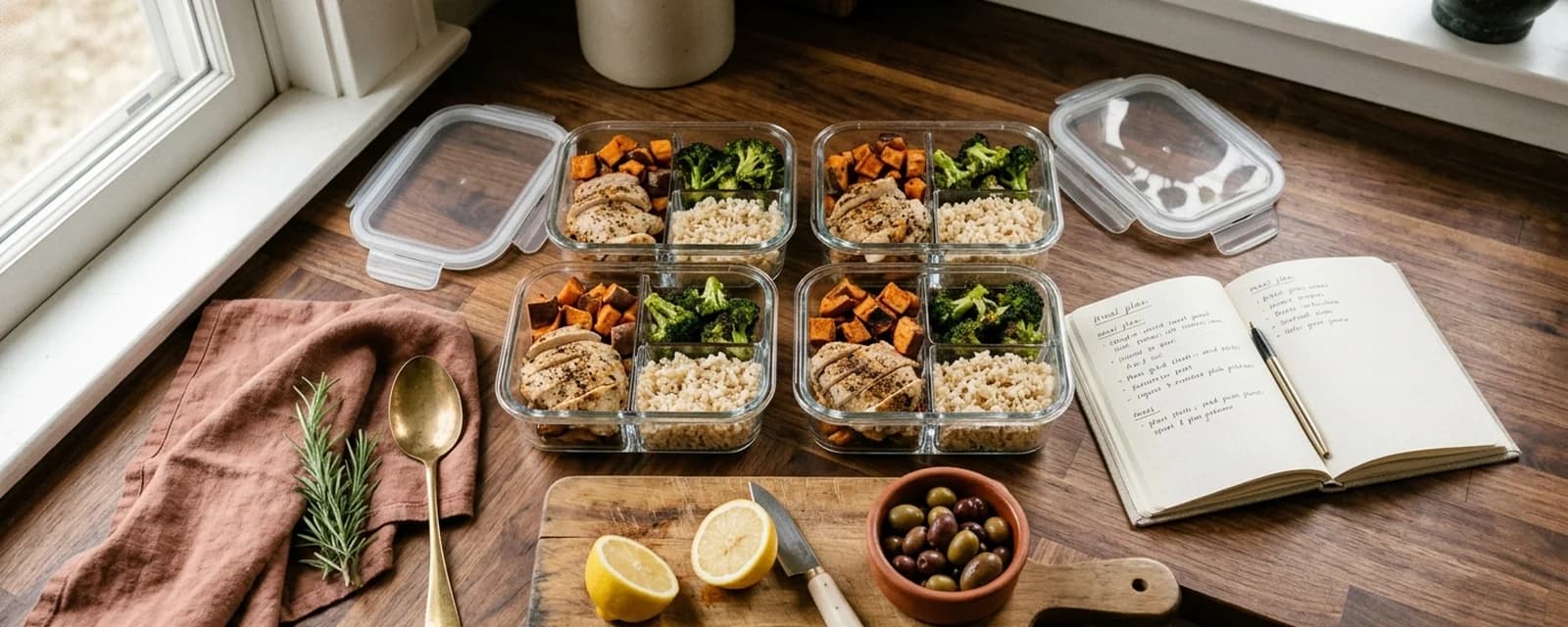
- Photo expectations are different. Readers want to see the day-four lunch box, not a styled food shoot.
- Print cost economics matter. Color cookbooks need premium positioning; B&W with strategic photo pages is the indie sweet spot.
The meal prep sub-niches with real room in 2026
Generic "meal prep cookbook" is the most crowded keyword in the category. The wins are in the specific sub-niches where the reader has a clear self-identification ("I am a diabetic," "I am a single person who hates cooking dinner alone," "I have three kids and one of them only eats five foods"). Here is the honest read on the eight sub-niches that consistently work for indie publishers.
General meal prep for beginners
High demand, high competition. The entry-level book in the category. The way to win is not to compete head-on with the household names; it is to add a specific angle. "Meal Prep for Beginners Who Have Never Cooked Before" or "The First-Month Meal Prep Handbook for Recent Graduates" sells better than the generic version. Aim for 60 to 80 recipes, $14.99 paperback.
Keto meal prep
Mature but still active. The early-2020s keto rush has cooled, which is actually good news because the casual entrants have moved on and the readers who remain are committed buyers. The angle that works in 2026 is specificity: "Keto Meal Prep for Type 2 Diabetics," "Lazy Keto Meal Prep for Office Workers," "Family-Friendly Keto Meal Prep." Macros are non-negotiable; calculate and include them for every recipe.
Diabetic-friendly meal prep
Under-served and durable. The reader is buying with a medical motivation, which makes them a committed buyer. Include carb counts per serving, glycemic-load notes where useful, and an introduction that respectfully avoids medical advice while clearly framing the book as a meal-planning tool, not a treatment plan. Price slightly higher at $16.99 to $19.99 paperback; the reader is committed.
Plant-based meal prep
Growing steadily. The reader profile is split between health-motivated buyers, ethics-motivated buyers, and budget-motivated buyers, which means the framing in the introduction matters. Pick one angle (plant-based for energy, plant-based for animal welfare, plant-based for grocery savings) and lean into it. Photography matters more here than average because plant-based meals can look unappealing if shot badly.
Family-friendly meal prep
The largest underserved sub-niche by buyer volume. The reader is the household chef trying to feed 2 to 5 people including at least one picky eater. Include "kid-friendly" tags on every recipe, scale serving sizes to 4 to 6 portions by default, and dedicate at least one chapter to the "build-your-own" formats (taco bars, grain bowls, pasta toppings) that let each family member assemble their own version.
Single-person meal prep
Massively under-served and high-volume. Most cookbook recipes scale to 4 servings; single-person readers are stuck eating the same thing for four days or wasting half the groceries. A meal-prep cookbook explicitly built around 1 to 2 servings per recipe, with notes on splitting and freezing, is a clear differentiator. Price at $14.99 paperback. Plan a series.
Athlete and high-protein meal prep
Smaller volume, higher commitment, premium pricing. The reader cares about macros, protein per serving, and post-workout vs rest-day variants. Include nutritional breakdowns for every recipe and split chapters into "training day," "rest day," and "race week." Paperback at $16.99 to $19.99 holds; premium full-color edition at $24.99 works if photography quality supports it.
Freezer meal prep
Practical and durable. The reader is preparing for a specific scenario: new baby, busy season, snow-stocked pantry, low-spoon weeks. Recipes need to be tested for actual freezer-to-table performance, not assumed. Include freeze time, thaw method, and texture-after-thaw notes for every recipe. Often paired with "make-ahead meal prep" to broaden the audience.
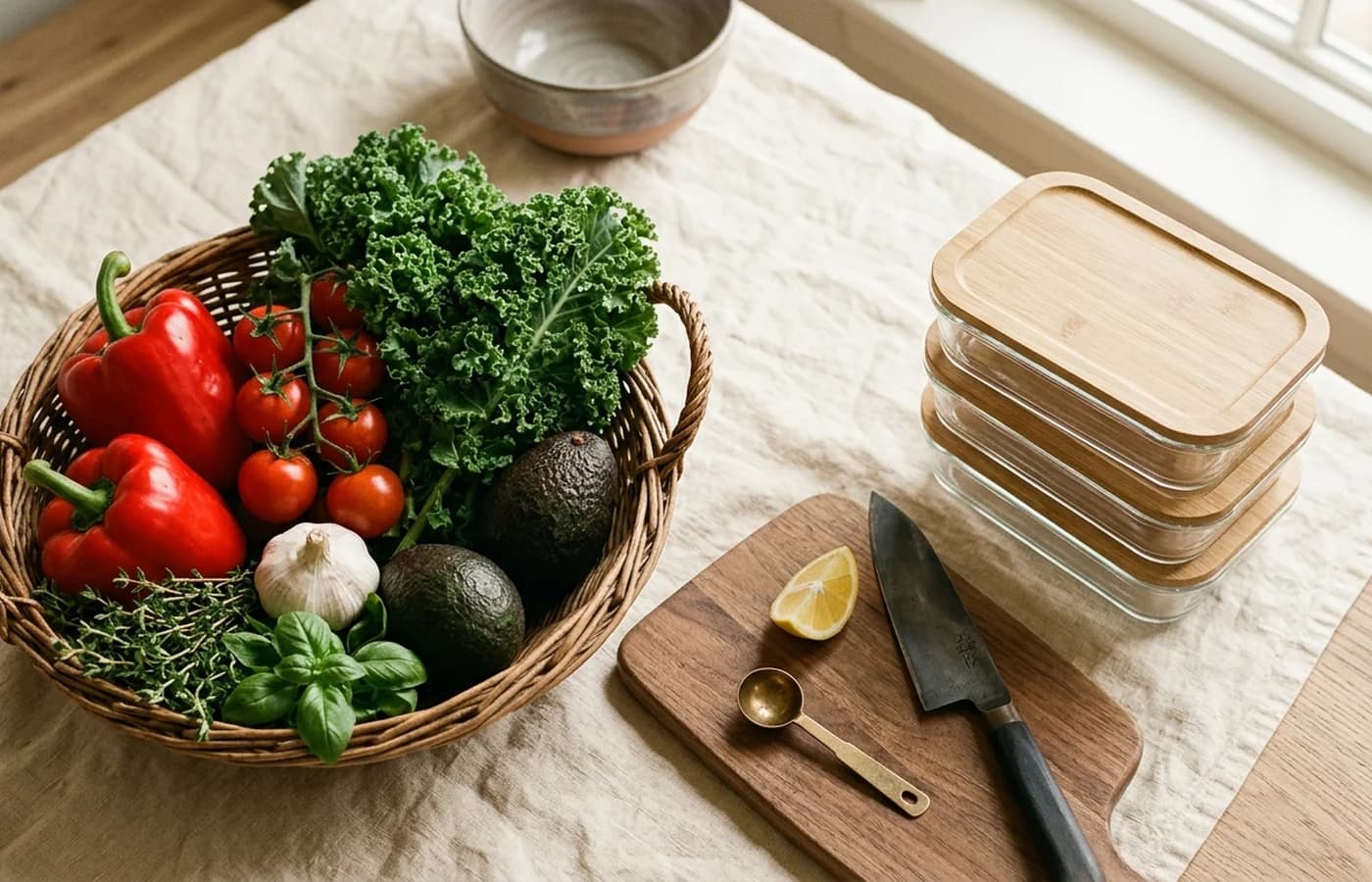
Cover and interior photography should look like the reader's actual kitchen on a Sunday afternoon, not a Michelin shoot.
Recipe count: how many is enough, how many is too many
The temptation when writing a cookbook is to pack in as many recipes as possible. Resist it. The data on Amazon reviews is unambiguous: cookbooks with 70 to 90 recipes review better than cookbooks with 150 recipes. The reason is simple. Readers who buy a cookbook with 150 recipes use 10 percent of them and feel like they wasted their money. Readers who buy a cookbook with 75 recipes use 30 to 40 percent of them and feel like the book paid for itself.
The recipe-count framework that consistently produces 4.5+ star books:
- Breakfasts: 10 to 15 recipes
- Lunches: 15 to 20 recipes
- Dinners: 20 to 25 recipes
- Snacks: 8 to 12 recipes
- Sauces, dressings, condiments: 6 to 10 recipes
- Weekly meal plans: 4 to 6 plans that pull from the recipes above
That totals 60 to 85 recipes plus 4 to 6 weekly plans, which lands at a 160 to 220 page book in the $14.99 to $19.99 paperback range. That is the sweet spot.
Photography or illustration: the meal prep specific answer
General cookbooks can go either way. Illustrated cookbooks have personality, photographic cookbooks have realism. For meal prep specifically, photography wins almost every time, because the reader is making a visual judgement about whether your "Thursday lunch reheated in the office microwave" is going to look like food they want to eat at 12:30 on a busy day.
The realistic indie options:
DIY phone photography
Modern phones shoot food photography that looks completely professional with natural window light, a $25 white foam-board reflector, and 20 minutes of styling. The trick is shooting in the same spot at the same time of day on every shoot day, so the lighting and tone is consistent across the book. Plan two full-day shoots: one for hero recipes, one for everything else.
Stock food photography
Adobe Stock and Shutterstock have huge inventories of meal prep photography. The risk is that the same image shows up in three competing cookbooks. The mitigation: lean toward less popular dishes and ingredient shots, use stock for sides and snacks where uniqueness matters less, and shoot your own photos for the hero recipes that anchor each chapter.
Hire a food photographer
Budget $500 to $2,500 for a full cookbook shoot, depending on photographer and city. Worth it for the premium $24.99+ tier; rarely worth it for the $14.99 to $19.99 tier where the math does not work.
No photos at all
Possible but risky for meal prep specifically. Works for budget niches and recipe-dense reference cookbooks. Does not work for general meal prep where the visual is part of the buying decision. If you go this route, lean into typography and excellent recipe writing and price aggressively at $9.99 to $11.99.
Color vs black and white paperback: the print cost math
This is the single biggest economic decision in your cookbook. Get it wrong and you cannot price the book at a profitable level. The KDP print costs as of 2026, for a 6x9 paperback:
- Black and white interior: $1.00 fixed + $0.012 per page
- Standard color interior: $1.00 fixed + $0.045 per page
- Premium color interior: $1.00 fixed + $0.080 per page
For a 200-page paperback that means:
| Interior | Print cost (200 pages) | Min viable price (60% royalty) | Realistic selling price | Net royalty per copy |
|---|---|---|---|---|
| Black and white | $3.40 | $9.99 | $14.99 to $16.99 | $5.59 to $6.79 |
| Strategic mixed (B&W + 20 color pages) | $4.00 to $5.00 | $10.99 | $17.99 to $19.99 | $5.79 to $6.99 |
| Standard color (all pages) | $10.00 | $18.99 | $24.99 to $29.99 | $5.00 to $8.00 |
| Premium color (all pages) | $17.00 | $29.99 | $32.99 to $39.99 | $2.79 to $7.00 |
The conclusion most indie cookbook publishers reach: black and white interior at $14.99 to $16.99 is the safest tier, and strategic mixed (one full-color "photo plate" section in the middle of the book, plus a color cover) at $17.99 to $19.99 is the optimal tier when you have real photography. Full-color all-pages cookbooks only make economic sense when the buyer perceives it as a premium positioning, and your photography quality has to match.
The strategic mixed interior is the indie sweet spot
Cover conventions for meal prep cookbooks
Cookbook covers split into two clear camps and meal prep readers are firmly in the first one. Food-forward photography is dominant. The second camp, styled illustration, works for personality-led general cookbooks but underperforms for meal prep specifically. The cover rules that work in 2026:
- One hero food image. A single photographed dish or arranged spread, shot from above or at a flattering 45-degree angle. The dish should look achievable, not like a Michelin plate.
- Clear sub-niche keyword in the title. "Family Meal Prep," "Diabetic Meal Prep," "Single-Serving Meal Prep." The reader is searching by sub-niche.
- Recipe count or week count on the cover. "75 Recipes" or "4 Weeks of Meals" are conversion-positive.
- Author credentials if any. RD, RDN, certified nutritionist credentials carry weight in this category.
- Trim size 7x10 or 8x10 for premium positioning. 6x9 is fine for the $14.99 tier; larger trim signals "real cookbook."
For deeper cover mechanics, see our how to create the perfect KDP book cover and the related recipe cookbooks for KDP guide.
Design a meal prep cover that actually sells
Create a print-ready cookbook cover in minutes with KDPEasy. Built-in trim sizes, bleed, and spine width for color or B&W interiors.
Start your cover freePricing the cookbook: where the $14.99 to $19.99 tier comes from
The pricing logic for meal prep cookbooks follows print cost more closely than other nonfiction. The $14.99 to $19.99 paperback range is where the math, the buyer expectation, and the competitive set all overlap.
- $14.99 paperback. 150 to 180 page B&W book with a color cover. The entry point. Best for first cookbooks and aggressive ads positioning.
- $16.99 paperback. 180 to 220 page B&W book with strategic color insert pages. The default tier for most indie meal prep cookbooks.
- $19.99 paperback. 200 to 240 page book with quality photography (often a mixed-interior or all-color premium edition). Best when you have credentials or a strong sub-niche positioning.
- $24.99 to $29.99 paperback. Premium full-color, 220+ pages, professional food photography, brand-quality positioning. Rarely the right call for a first cookbook.
Ebook pricing for cookbooks usually sits at $4.99 to $9.99. The lower end ($4.99 to $6.99) makes sense as a promo or a "buy paperback for the real experience" anchor. The $9.99 ebook captures the 70 percent royalty band and works well as a standalone product for the digital-first reader who reads on an iPad.
Series strategy: seasons or diet types
Cookbook series compound powerfully. The same reader who buys your first cookbook is the most likely buyer of your second, and your third, because they have already committed to the cooking system you teach. The two series patterns that work for meal prep:
The seasonal series
Spring Meal Prep, Summer Meal Prep, Fall Meal Prep, Winter Meal Prep. Four books in two years, with each book leaning into the season's ingredients, cooking methods, and emotional context (cooling summer salads, comforting winter stews). Cross-link aggressively in the back matter. Bundle into a year-round box set when all four are out.
The diet-type series
Keto Meal Prep, Mediterranean Meal Prep, Plant-Based Meal Prep, etc. Three to five books in two to three years, each targeting a different diet community. The pro: each book taps a different audience. The con: you have to credibly write across multiple dietary frameworks, which is harder than it sounds. Best when you have a multi-diet background (registered dietitian, certified nutritionist).
The third pattern, sub-niche deepening (Family Meal Prep, Family Meal Prep for Picky Eaters, Family Meal Prep on a Budget), works but tends to cannibalise sales between books. Use it for book three or four, not book two.
For the visual logic of consistent series covers, see our book series covers cohesive design guide.
AMS keyword strategy for cookbooks
Cookbook ads behave differently from other nonfiction. The cost-per-click is lower (often $0.30 to $0.60 versus $0.60 to $1.20 for self-help), but the buyer is comparing 4 to 8 cookbooks visually before deciding, which means your cover and your Look Inside preview do most of the conversion work. The keyword framework that works:
Layer 1: sub-niche keywords (highest priority)
The exact phrases your reader is typing. "Keto meal prep cookbook," "family meal prep for picky eaters," "diabetic meal prep recipes," "freezer meal prep for new moms." These are your bid-up-aggressively keywords. They convert highest.
Layer 2: occasion and intent keywords
"Meal prep for beginners," "Sunday meal prep," "back-to-school meal planning," "new year meal prep." These pull in casual buyers who are at the start of their meal-prep journey. Lower conversion than Layer 1 but much higher volume.
Layer 3: ingredient and cuisine keywords
"Chicken meal prep," "high protein meal prep," "Mediterranean meal prep recipes," "instant pot meal prep." These cast a wide net. Bid modestly and prune aggressively.
Layer 4: product targeting
Target the ASINs of the top 30 books in your sub-category and the top 10 books in adjacent sub-categories. This often outperforms keyword campaigns for cookbooks because the buyer is browsing visually, comparing covers.
Start the first 30 days at $10 to $15 per day across two campaigns (manual keywords + product targeting). Prune underperformers at day 30. Scale winners at day 45. Expected ACOS at 90 days: 25 to 45 percent. The deeper playbook lives in our Amazon Ads for KDP strategy guide and the keyword research mechanics are in the KDP keyword research guide.
The 14-week meal prep cookbook timeline
- Weeks 1 to 2: Sub-niche selection and validation. Browse Amazon Best Sellers in Cookbooks > Special Diet, read the three-star reviews of the top 10 competing books, lock in your angle.
- Weeks 3 to 4: Recipe outline. List 80 to 100 candidate recipes organised by chapter. Build the 4 to 6 weekly plans that pull from them.
- Weeks 5 to 10: Recipe development and testing. Cook every recipe at least once, ideally twice. Take photos as you go. Write up the recipes within 24 hours of testing while the cooking is fresh.
- Week 11: Photography catch-up day. Reshoot anything weak. Style the hero photos.
- Week 12: Write the introduction, the meal-plan chapters, the shopping lists, the storage guide, and the back matter. Lock in the lead magnet (printable shopping list template or 1-week starter plan).
- Week 13: Cover design, interior layout, recipe formatting, A+ Content. Beta readers from your sub-niche community get a PDF.
- Week 14: Final edits, proofread, upload to KDP. Set the launch pre-order 10 to 14 days out.
Cookbook mistakes that quietly tank reviews
- Recipes that do not store. Test every recipe for day 4 reheats. Any recipe that turns soggy or rubbery gets cut.
- No nutritional info. Even non-diet meal prep buyers want calorie counts. Use a free tool like Cronometer to calculate.
- Missing shopping lists. The weekly plan is incomplete without a consolidated shopping list. Readers feel cheated.
- Photos that do not match the recipe. Stock photos used for the wrong dish are the single most common cookbook review complaint. Match every photo to its actual recipe.
- No serving-size scaling. Recipes scaled to 4 servings only are useless for solo readers and inadequate for families of 6. Provide scaling notes.
- Padded recipe count. A book of 150 recipes where 60 of them are slight variations of "add a different seasoning" loses to a tight book of 70 distinct recipes.
- Print-cost surprises. Publishing a 280-page all-color book and pricing it at $14.99 because that is what competitors charge means losing money on every sale.
Ready to publish your meal prep cookbook?
Generate a print-ready cookbook cover with the right trim size, bleed, and spine width for your B&W or color interior. Free to start.
Create your cover freeAdjacent niches worth considering
If meal prep itself is too crowded for your specific angle, three adjacent cookbook and reference niches are friendly to indie publishers:
- Recipe and general cookbooks. Wider scope, harder to win without a platform. See our deeper coverage in the recipe cookbooks for KDP guide.
- Fitness and health journals. A hybrid of nonfiction cookbook and low-content product, often paired with a meal prep companion. Covered in the fitness and health books on KDP guide.
- Homesteading and rural living. Covers garden-to-table meal planning, preserving, and seasonal cooking. See the homesteading and rural living books guide.
The bottom line
Meal prep cookbooks are one of the rare cookbook sub-niches where indie still wins, but only when you treat the book as a system, not a recipe collection. Pick a sharp sub-niche (single-person, diabetic, family with picky eaters, freezer-only, athlete). Ship 70 to 90 tested recipes with 4 to 6 working weekly plans and honest shopping lists. Choose the print interior that matches your photography quality and pricing tier; for most authors that is a strategic mixed interior at $17.99 paperback. Build a clean food-forward cover with the sub-niche keyword and recipe count visible. Run ads patiently for 90 days. Plan book two as a seasonal or diet-type sequel before book one ships. Do that twice and you have a cookbook catalogue that quietly earns five figures a year on a permanent shelf.
A FEW MORE ANSWERS
Frequently asked questions
For a standalone meal prep book, aim for 50 to 100 recipes. Below 40 the book feels slight and the reviews mention it. Above 120 the book gets unwieldy, print costs spike, and readers report they only use 20 percent of the recipes. The sweet spot is 70 to 90 recipes organised by use case (breakfast, lunch, dinner, snacks, sauces, freezer-friendly) with 4 to 6 weekly meal plans that pull from them. That structure gives you a 150 to 220 page book at a manageable price point.

ABOUT THE AUTHOR
Danielle Okonkwo
Marketing & Growth Lead at KDPEasy. Danielle is a published author with 12+ titles on Amazon KDP and a former book blogger. She draws on hands-on publishing experience and years of testing what works in the KDP marketplace.
Meet Danielle