
Print-ready journals for Amazon KDP in under 30 minutes.
Gratitude, fitness, planner, prayer, mental health, travel. KDPEasy is the AI journal creator built for KDP. Cover, 120-page interior with the right tracker layouts, and a full-wrap PDF. Upload-ready, 300 DPI, commercial rights yours.
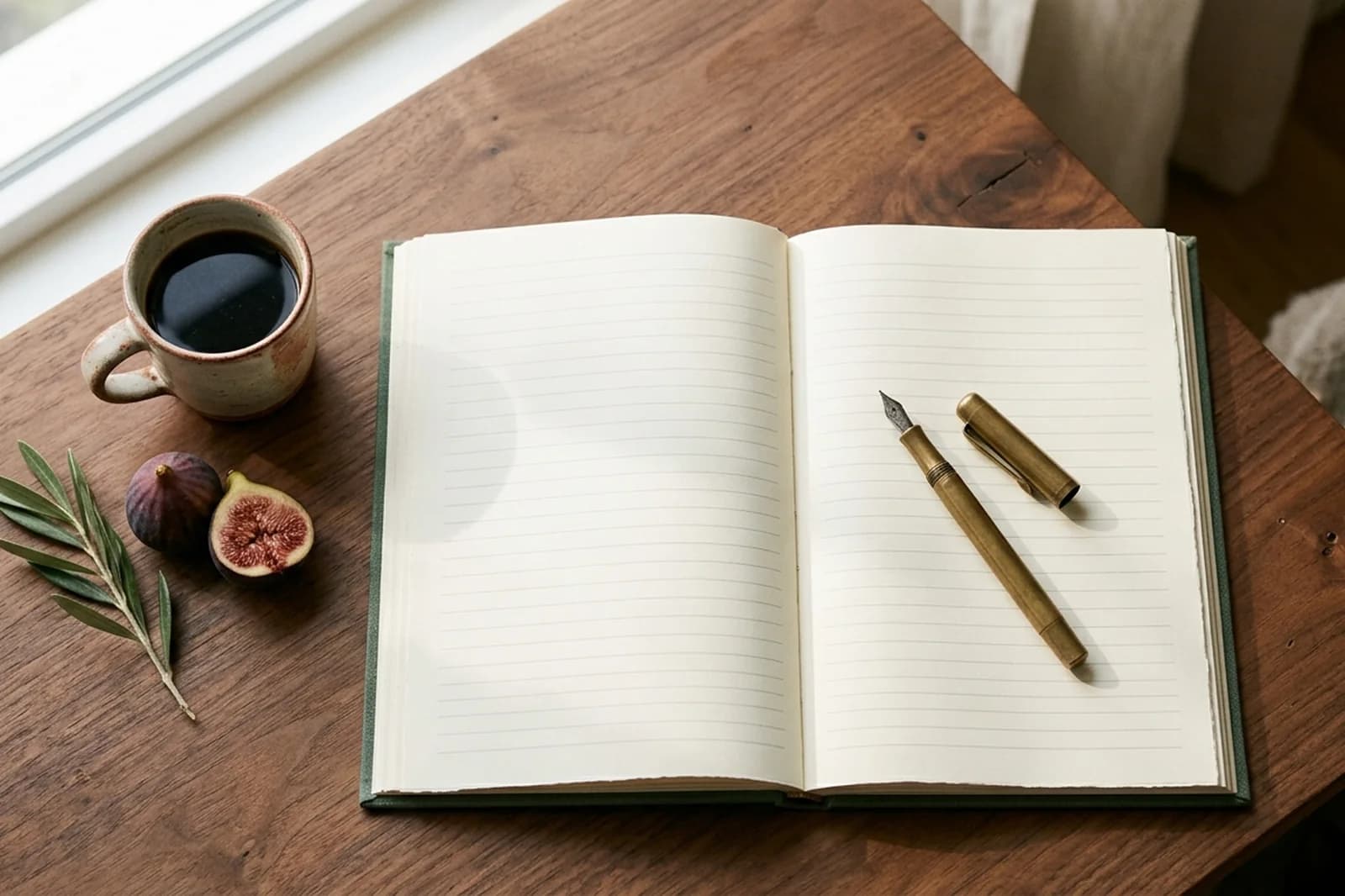
Cover, 120 interior pages, full-wrap PDF
KDP sweet spot for $12.99 list
Per copy at $12.99 list, 6x9
60% of journal sales on Amazon
Real journals, generated with KDPEasy.
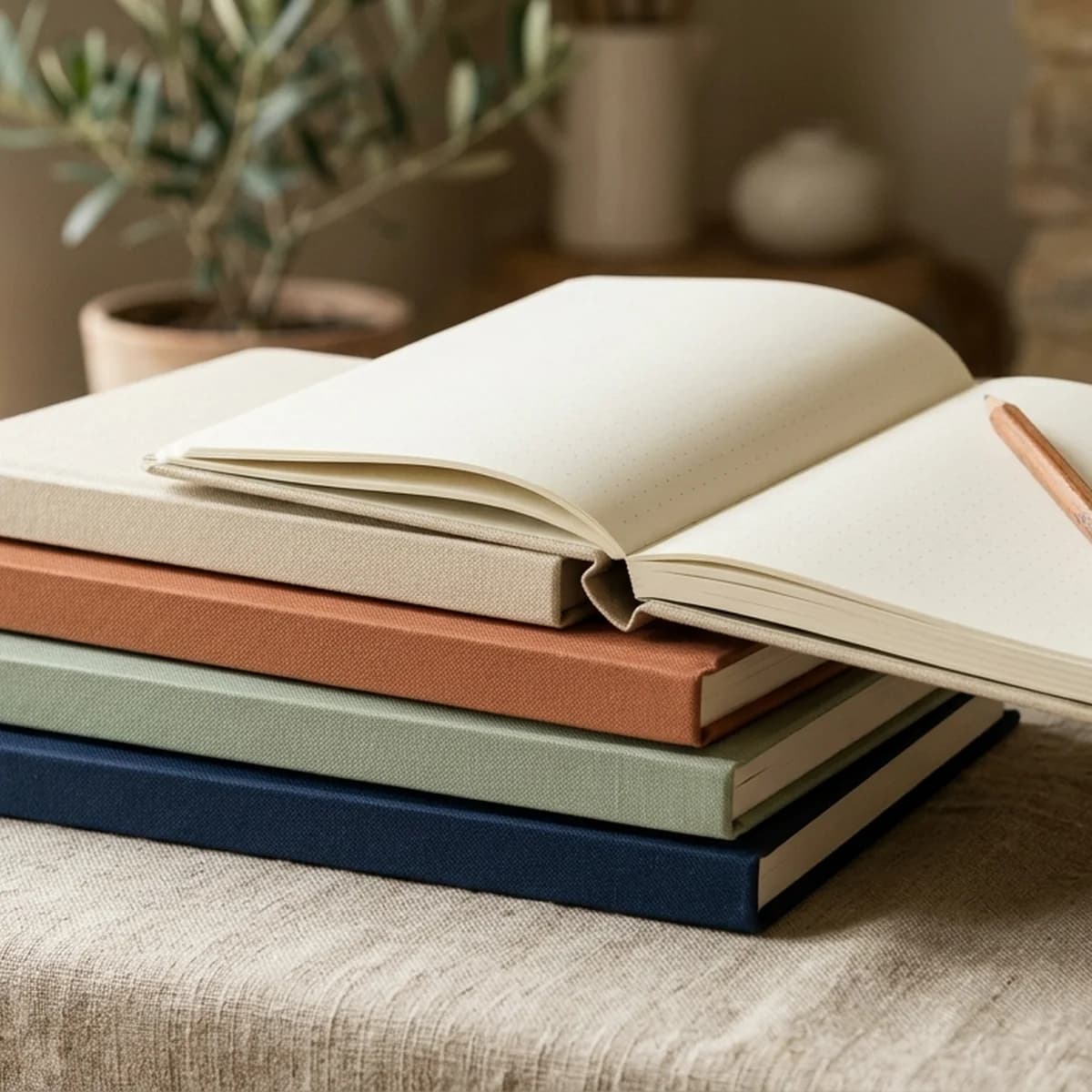
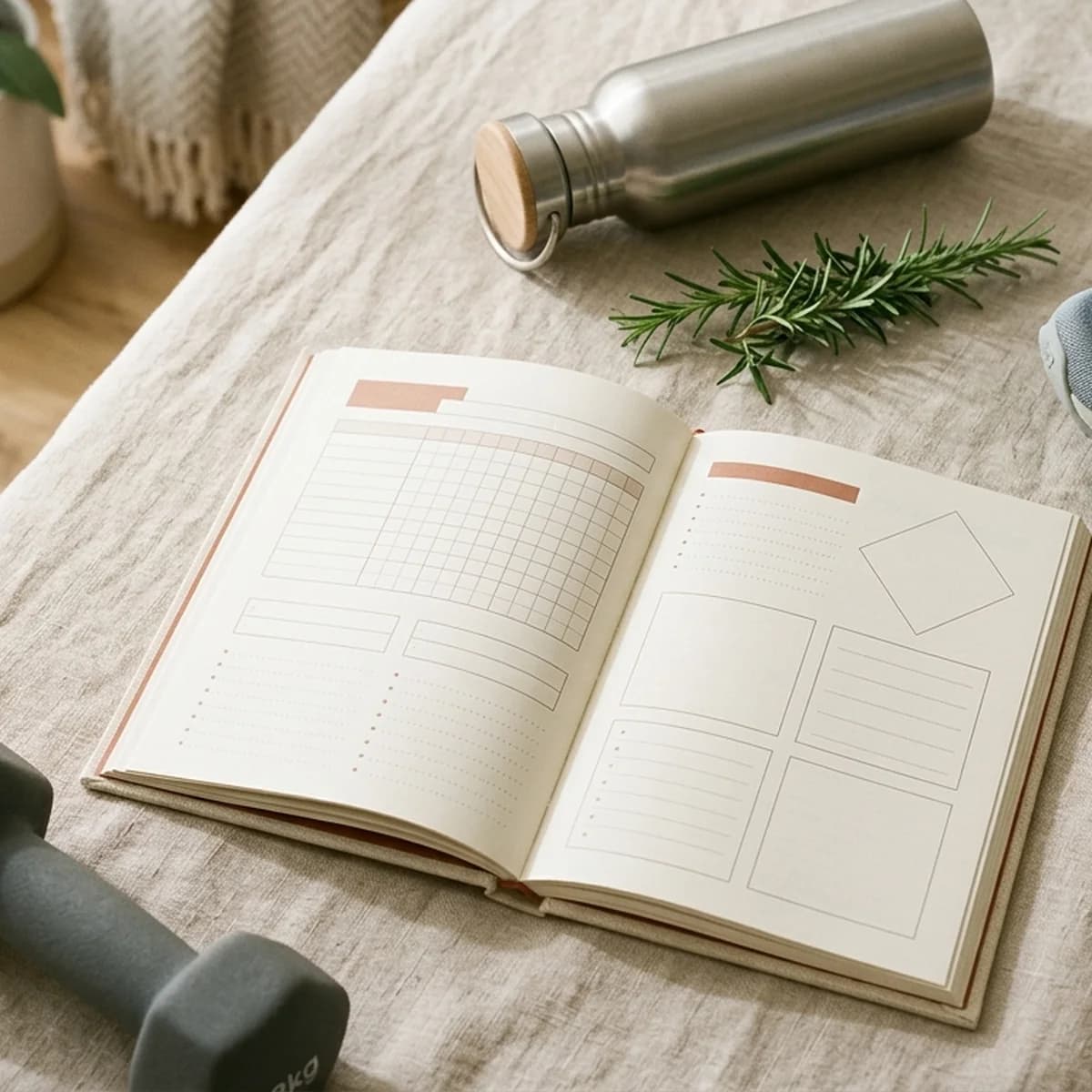
A stack of finished hardcover journals ready to upload, and a fitness tracker spread laid flat with shoes and rosemary. Both shipped in one workflow.
Four steps from idea to live on Amazon.
No Canva templates. No spine-width math. No fiddling with margin guides. KDPEasy produces both the cover and the interior in KDP-ready PDFs, with the right tracker layouts for your niche.
Generate the cover
Pick the journal type: gratitude, fitness, planner, prayer, mental health, travel. KDPEasy renders four minimalist cover concepts with niche-correct color psychology, gift-ready typography, and the spine width pre-calculated from your page count.
- Aesthetic-led, minimal by default
- Gift-shop and bookstore feel
- Auto spine width, no math
Generate the interior layout
Choose your interior: lined, dotted-grid, weekly planner, daily reflection, fitness tracker with calorie and meal log, gratitude prompts with 3-thing layout. The interior generator builds a full 120-page bookblock with the right page furniture for your niche.
- Built-in fitness, gratitude and planner templates
- Calorie + meal + workout trackers ready to go
- Page numbers, headers, gutter handled automatically
Format for KDP
KDPEasy binds the interior to a full-wrap cover, applies 0.125" bleed, 0.375" gutter, and embeds fonts. Trim sizes 5x8, 6x9 and 8.5x11 are all supported. The output is a clean two-PDF package that passes the KDP upload validator on the first try.
- 5x8, 5.25x8, 6x9 and 8.5x11 trim
- 0.125" bleed and 0.375" gutter
- CMYK profile, embedded fonts
Download and upload to KDP
Download both PDFs and drag them into the KDP paperback flow. Set your price (the calculator shows your royalty in real time), publish, and you’re live on Amazon. Most authors are selling within 72 hours of clicking Generate.
- Two PDFs, ready to upload
- Commercial rights yours
- Live on Amazon in 72 hours
Six deliverables, one single workflow.
Full-wrap cover PDF
Front cover with niche-correct color psychology, spine, back cover, 300 DPI, CMYK, 0.125" bleed.
120-page interior PDF
Lined, dotted, planner or tracker. Print-clean at 300 DPI. Page numbers and section headers built in.
Tracker components
Calorie counter, macro tracker, workout log, weight chart, daily reflection prompts, habit grid, period tracker.
Series-ready template
Lock cover design for Volume 1, swap subtitle and theme for Volumes 2, 3, 4. Compound the brand.
All KDP trim sizes
6x9 (most popular), 5x8 (pocket), 5.25x8 (premium), 8.5x11 (large tracker). Auto spine on every size.
KDP-compliant by default
Trim, bleed, gutter, font embedding all match KDP 2026 spec. Validator passes first time, no resubmits.
KDP royalties for journals, in real numbers.
Journals use KDP’s standard paperback model. Guided journals (with prompts, trackers and planner spreads) routinely outprice blank notebooks 2x to 3x. Below is the actual royalty at 60% in the US store, KDP’s 2026 print cost.
Numbers reflect KDP’s 2026 paperback print cost in the US marketplace at the 60% royalty option. Live numbers, including other marketplaces and your specific page count, are shown inside the KDPEasy royalty calculator.
The six journal niches that consistently sell.
"Daily Journal" is saturated. These six guided sub-niches still rank in 2026, especially with the niche-correct interior layout.
Gratitude journals
$10.99 - $14.99- 3-thing daily prompts
- Soft peach / sage palette
- Gift market ready
- Highest volume niche
Fitness & weight-loss
$13.99 - $17.99- Calorie + macro tracker
- Weekly weigh-in chart
- Workout log + progress photos
- 12-week or 12-month formats
Planners & productivity
$13.99 - $19.99- Weekly + monthly spreads
- Goal-setting frameworks
- Habit tracker grid
- Undated for evergreen sales
Mental health & anxiety
$11.99 - $15.99- CBT-style prompts
- Mood log
- Trigger tracker
- Calming color palette
Prayer & spiritual
$10.99 - $14.99- Scripture prompt fields
- Praise + petition log
- Verse-of-the-day layout
- Strong gift overlap
Travel & adventure
$9.99 - $13.99- Destination log
- Map sketch space
- Packing checklist
- Memory + photo notes
Built by journal publishers, for journal publishers.
“I tried Canva, I tried Photoshop, neither got the minimal, elegant feel my gratitude journals needed. KDPEasy nailed it on the second try, and the interior templates saved me a week of formatting work. Sales are up 40 percent.”

“The calorie and macro tracker layouts are exactly what serious lifters want. I priced my 200-page tracker at $17.99 and it stuck. Two of my titles are in the Top 50 of weight-loss journals right now.”

“I launched a five-volume undated planner series in one weekend. Same cover lockup, different niche subtitle. The interior generator is the reason my Q1 was the best quarter I have ever shipped.”

Journal questions, answered.
How long does it take to make a journal with KDPEasy?
+
Under 30 minutes for a 120-page journal. Cover generation runs in about 2 minutes, the interior generator builds a 120-page bookblock in 5 to 10 minutes, and assembly into KDP-ready PDFs adds another few minutes. Most authors are uploading to KDP within an hour of starting.
What design elements increase sales on a KDP fitness journal?
+
The features that consistently sell are: a clear calorie and macronutrient tracker, a weekly weigh-in chart with a visible trend line, a workout log with sets, reps and RPE columns, a habit grid for water, sleep and steps, and a progress-photo placeholder. Cover-side: bold colors (red, orange, teal), strong sans-serif typography, and a clear sub-title that names the duration (12 weeks, 90 days, 12 months).
What features sell best on a KDP fitness journal: calorie tracker or meal planner?
+
Both. Buyers searching for fitness journals expect a calorie tracker (calories, protein, carbs, fat per meal) and a weekly meal planner page. The top-selling titles include both, plus a workout log. Stripped-down trackers with only one of these features convert worse, even at a lower price.
What size should my journal be on KDP?
+
6 x 9 is the gold standard and accounts for roughly 60 percent of journal sales. 5 x 8 works for pocket and travel journals. 8.5 x 11 is the right size for fitness trackers and full-page planners where buyers need room to write. KDPEasy supports all KDP paperback trim sizes and auto-calculates spine width from page count.
What is the KDP royalty on a $12.99 journal?
+
On a 120-page 6 x 9 journal priced at $12.99 in the US store, the 60% royalty path nets you about $3.84 per copy after Amazon’s print cost of roughly $3.95. At $14.99 list with 150 pages you net around $4.44. Journals follow the standard KDP paperback cost model with a per-page print fee, so longer journals can support higher prices.
Are journals considered low content on Amazon KDP?
+
Some journals are classified as low content, specifically blank, lined, dotted or grid notebooks with no unique interior beyond ruling. Guided journals with prompts, trackers, scripture fields or planner spreads are regular content. KDPEasy generates both. For low-content uploads you toggle the low-content flag during the KDP upload step, and there is no royalty difference.
What are the best KDP journal and planner niches for 2024-2025-2026?
+
Gratitude journals (steady evergreen), fitness and weight-loss journals (huge Q1 surge), undated planners (work all year), mental health and anxiety journals (growing fast), prayer and scripture journals (strong gift overlap), and niche habit trackers (sleep, sobriety, fertility). The micro-niches outperform broad "Daily Journal" titles in 2026.
What is the trend for low-content books in 2026?
+
The market is shifting from blank notebooks toward guided journals and structured planners. Buyers will pay $12 - $17 for a book with prompts and trackers but only $5 - $7 for a blank lined notebook. The winning play is to compete in guided journals and undated planners where margins are 3x higher and competition is lower.
How do I position my journal as a gift item?
+
Use premium-feeling color palettes (sage, terracotta, dusty rose, charcoal), elegant typography with a clear gift-friendly subtitle ("A Gift for Your Mom", "For New Beginnings"), and minimalist composition. Avoid clip-art and digital-looking aesthetics. Soft textures, serif fonts and restrained 2 to 3 color palettes signal premium and drive gift-buyer conversion.
Can I create a series of journals with consistent covers?
+
Yes, and the platform is built for this. Lock the cover lockup for Volume 1, then swap the subtitle and palette for Volumes 2, 3, 4. Series branding compounds: repeat buyers, easier review velocity, and higher per-author trust. The most profitable KDPEasy users publish in series of 5 to 12 related journals.
Your next journal is 30 minutes away.
First journal is free. No credit card. Cover + 120 pages + full-wrap PDF.