
Cookbooks: get the food photography aesthetic right, format chapters, and ship a KDP-ready file.
Recipe books, diet guides, regional cuisines, and meal-prep titles. KDPEasy ships the food-photographic cover, the recipe interior layout, and the print-ready file in one workflow.
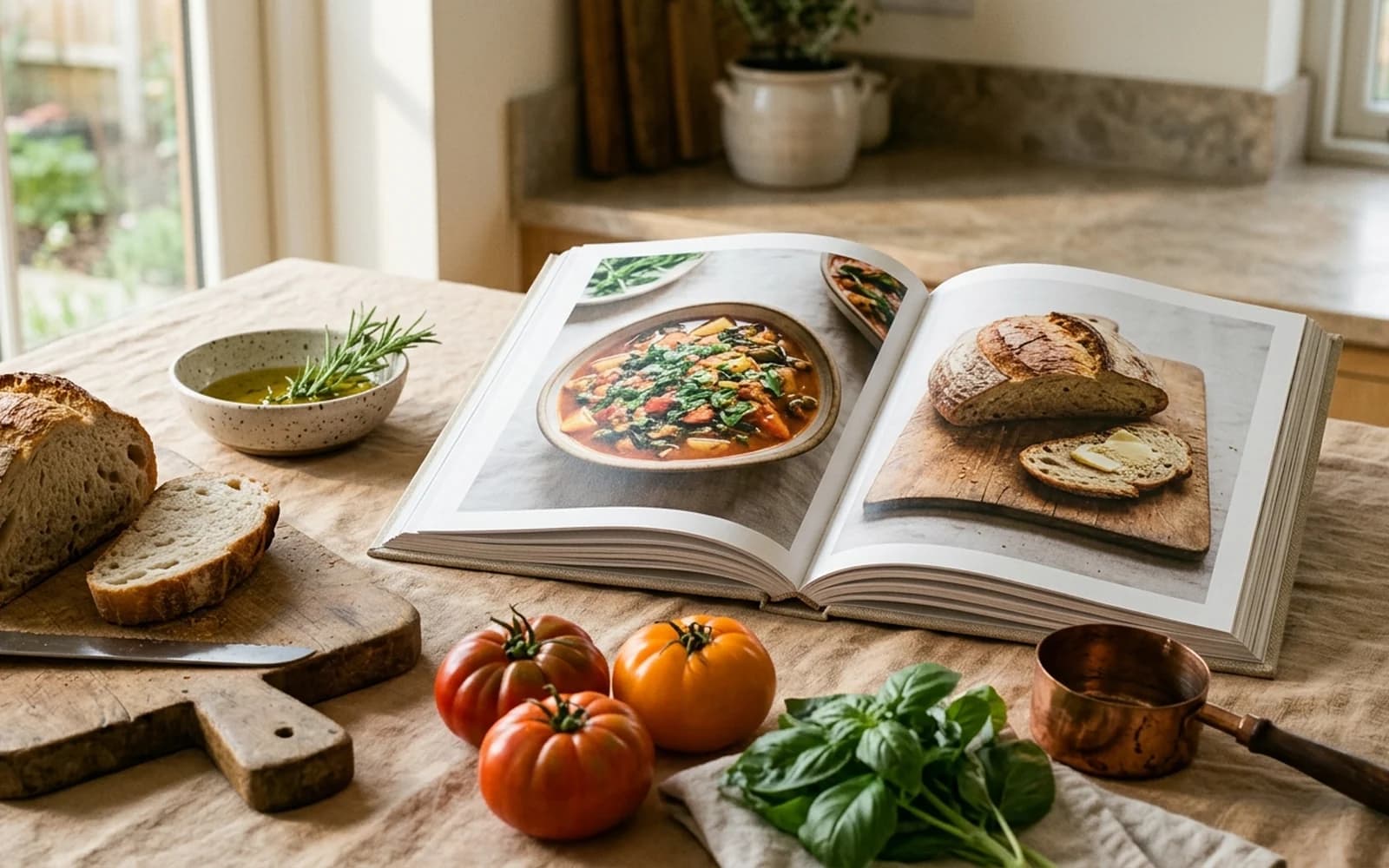
What a publisher-grade cookbook cover actually looks like.
Look at the cookbook bestseller list. One hero food photograph. A restrained serif title. A diet, cuisine, or recipe-count callout. Generous white space. Warm photographic light. That is the look KDPEasy delivers, every time.
- One hero food photo, not a stock collage
- Serif title pairing, generous white space
- Diet, cuisine, or appliance callout badge
- Warm palette - never cold blue dominant
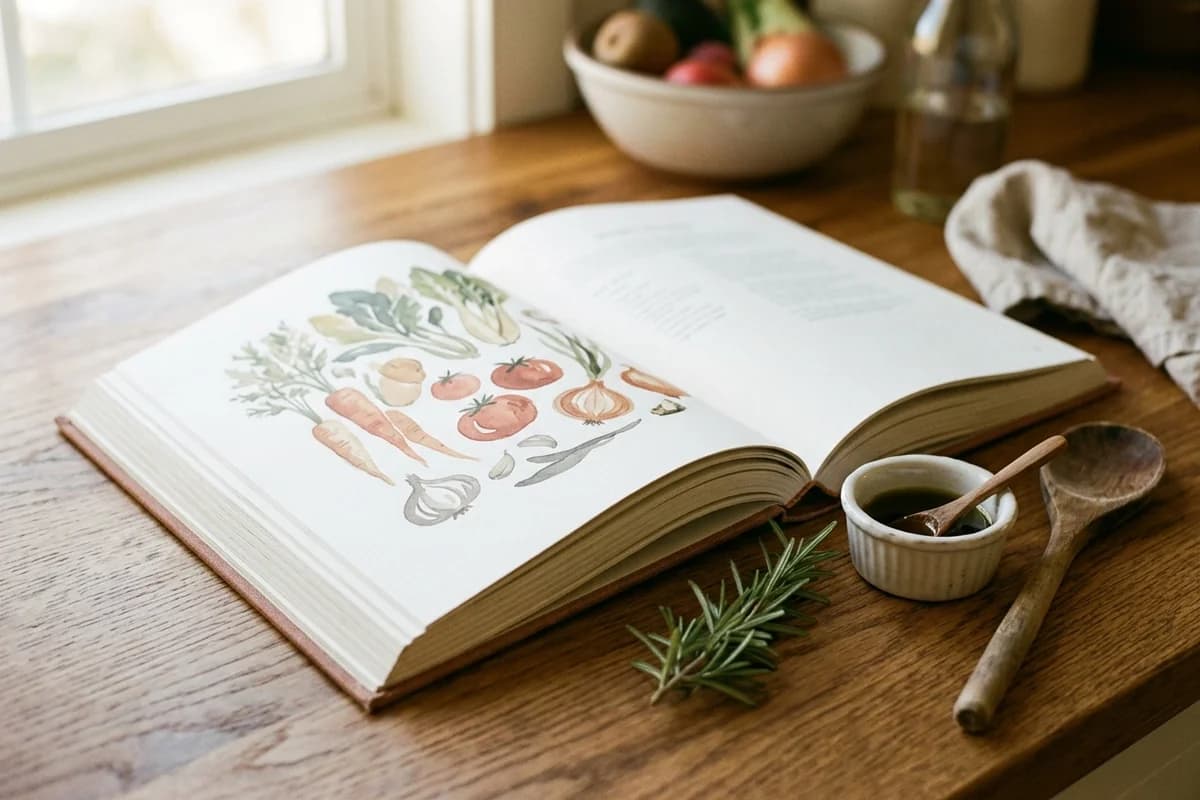
From niche to KDP-ready in four steps.
Pick your sub-niche and constraint
Air fryer for busy families. 5-ingredient keto. Korean banchan for beginners. The narrower the constraint, the easier to rank and sell. KDPEasy starts with a niche picker that knows the cookbook shelves.
Generate cover directions
Five food-photographic directions: hero top-down, hero plate close-up, grid of dishes, illustrated callout, and editorial split. Pick one, refine title and badge, lock the look.
Format chapters and recipes
Cookbook interior is its own beast. KDPEasy lays out chapter intros, recipe cards with ingredient lists and method, tips and substitutions, plus a colour index. 6x9 or 8.5x11 trim, white 60lb paper.
Export KDP-ready file
Print-ready interior PDF with calculated spine, paperback or case-laminate cover, plus a Kindle 2,560 x 1,600 cover. Upload straight to KDP.
Six deliverables, one upload to KDP.
Paperback cover
300 DPI, full bleed, spine calculated from your chapter and recipe count.
Food-photo hero artwork
Editorial food styling that reads as bestseller, not faceted clip-art.
Recipe interior layout
Chapter pages, recipe cards, ingredient lists, method blocks, tips, index.
Kindle eBook cover
2,560 x 1,600 JPG. Optimised for Kindle search thumbnail.
Commercial rights
Full rights to use across KDP, Ingram, your site, classes, and merch.
Editable templates
Re-export for series titles. Drop in the next sub-niche without redesign.
Nine cookbook sub-niches, each with its own visual language.
Generic cookbooks lose to publishers. Specific sub-niches are where indie authors win. KDPEasy carries a distinct cover language and recipe layout for each one.
Family-Style
Big shared dishes, hand-set title, harvest tones.
Sourdough
Single hero loaf, serif title, flour-dust texture.
Instant Pot
Top-down bowl, appliance callout, dish + diet badges.
Keto / Paleo / Diet
White ground, recipe count, macro promise.
Italian
Pasta hero, hand-painted serif, golden hour light.
Korean
Bold reds, banchan grid, contemporary sans.
Mexican
Saturated colour, lime, hand-set title, table styling.
Beginner
Approachable hero, large recipe count, simple title.
Holiday / Seasonal
Season cue (pumpkin, citrus, snow), warm title block.
The four rules every bestselling cookbook cover follows.
High-end food photo, not faceted illustration
Cookbook buyers are appetite-driven. The bestselling cookbooks in every diet, cuisine, and appliance niche lead with a single hero food photograph, top-down or 45-degree, real light, no kitsch. KDPEasy ships photographic cover styling, never the faceted vector look.
Serif title, generous white space
Modern cookbook publishers (Phaidon, Ten Speed, Hardie Grant) favour a clean serif (Söhne Mono Title, GT Sectra, Tiempos Headline) over heavy display sans. Title sits above or below the hero image with breathing room. Diet or method callout becomes the secondary block.
Author byline + recipe count
Authority signal: "100+ Easy Recipes" or "60-Minute Weeknight Meals" right under the title. Author name credible but not screaming for attention. Optional cuisine or diet badge in the corner ("Mediterranean Approved" / "Keto" / "Whole 30").
Warm colour, never cold blue
Warm oranges, reds, yellows, browns, and creams stimulate appetite. Cold-blue palettes suppress it - reserve blue for cookbook backgrounds only when paired with strong warm food colour. Diet cookbooks use clean whites + sage/leaf green to signal health.
Cookbook royalty math, before you publish.
Cookbooks sell at a premium price band on KDP, partly because the food-photo cover and recipe interior do real work. Here is what a 200-page paperback realistically returns.
Enough recipes to justify the price; short enough to ship a tight, tested book.
Paperback. Premium diet and cuisine titles anchor $14.99-$19.99. Beginner books $9.99-$12.99.
Calculated on 200-page paperback at $14.99-$19.99 list, after KDP printing cost.
eBook at $5.99-$9.99, 70% royalty band. Kindle Unlimited adds page-read income for cookbook readers who browse multiple titles.
What cookbook authors say about the result.
“My Italian cookbook was getting buried. The new cover - one hero pasta shot, restrained serif title, golden light - made it look like a Ten Speed release. Sales tripled in the first month and Amazon finally pushed it in algo recommendations.”
“I write keto recipe books, very specific. KDPEasy gets the clean diet aesthetic right. White ground, sage accents, recipe count, macro promise. The covers finally signal credibility instead of looking like a Canva template.”
“The recipe interior layout saved me a week of formatting work per book. Ingredient lists, method blocks, substitutions, and an index that actually works. I do four titles a year now instead of two.”
Try your first cookbook cover free.
No credit card. Five food-photo directions in the first pass.
Create my cookbook coverCookbook author questions, answered.
What makes a cookbook cover convert on Amazon KDP?+
One hero food photograph, restrained serif typography, a clear sub-niche callout (diet, cuisine, appliance, or time constraint), and a recipe count or method promise. The bestselling cookbook covers in every category share this pattern. Cluttered covers with multiple stock images underperform consistently.
Should I use food photography or illustrations on my cookbook cover?+
Photography dominates mainstream cookbook bestsellers. High-end food styling reads as professional and makes the dishes look achievable. Illustration works for niche cases: childrens cookbooks, humorous titles, or strongly stylised cultural cookbooks. For 90 percent of self-published cookbooks, photography wins.
What trim size and page count should a cookbook be?+
6x9 paperback is the most common trim for self-published cookbooks. 8.5x11 works for cookbooks where each recipe needs a full-page photo. White 60lb paper for both - cream paper makes food photography look muddy. Page count 150-250 hits the value sweet spot.
How specific should my cookbook niche be?+
Very specific. "30-minute weeknight meals for families" outperforms "easy dinners." "Sourdough for beginners with no starter required" outperforms "bread baking." Diet, appliance, time constraint, or audience - one specific constraint dramatically improves Amazon ranking and conversion.
What price should I list a cookbook paperback at?+
Beginner cookbooks: $9.99-$12.99. Diet and cuisine cookbooks: $12.99-$16.99. Premium hardcover or specialist titles: $16.99-$19.99. eBook usually $4.99-$8.99. KDP Select with Kindle Unlimited can add meaningful page-read income for cookbooks that browse well.
What colours work best for cookbook covers?+
Warm: oranges, reds, yellows, browns stimulate appetite. Cuisine-specific: Italian leans cream + olive, Mexican leans saffron + cobalt, Korean leans white + chili red. Diet books: clean whites with sage or leaf green. Avoid cold-blue dominant palettes - they suppress appetite and reduce purchase intent.
How do I signal the cuisine or diet type clearly?+
Two layers. First, the hero food photograph itself should be iconic for that cuisine (a clear pasta shape, a banchan grid, a tagine, a salad bowl). Second, a small diet or method badge in the corner or under the title: "Keto," "Whole 30," "Mediterranean," "Vegan" - whatever the buyer searches for.
Will KDPEasy handle the recipe interior layout?+
Yes. Chapter intro pages, recipe cards with ingredient lists and step-by-step method, photo placement, tips and substitutions, a colour-coded index, and a table of contents. PDF for KDP paperback print plus reflowable Kindle format.
Can I publish a series of cookbooks with consistent branding?+
Yes. Lock the template (layout, typography pairing, badge style, hero photo treatment) for Book 1. Books 2-N keep the same template; only the title, food hero, and cuisine accent change. Cookbook readers buy the next book in a series when the visual identity is recognisable.
Are commercial rights included?+
Yes. Every plan ships with full commercial rights on covers and interior layouts. Use the cookbook on KDP, Ingram, your blog or course platform, ads, and merch. No royalty on book sales, no per-print fee.
Your recipes deserve a cover that makes mouths water.
No credit card required. First cover is free.