
Design an activity book kids actually finish.
Mix puzzles, mazes, coloring pages, and word search into one KDP-ready activity book. KDPEasy generates the full interior, a solutions appendix, and the full-wrap cover together. Print-ready PDF, full commercial rights.
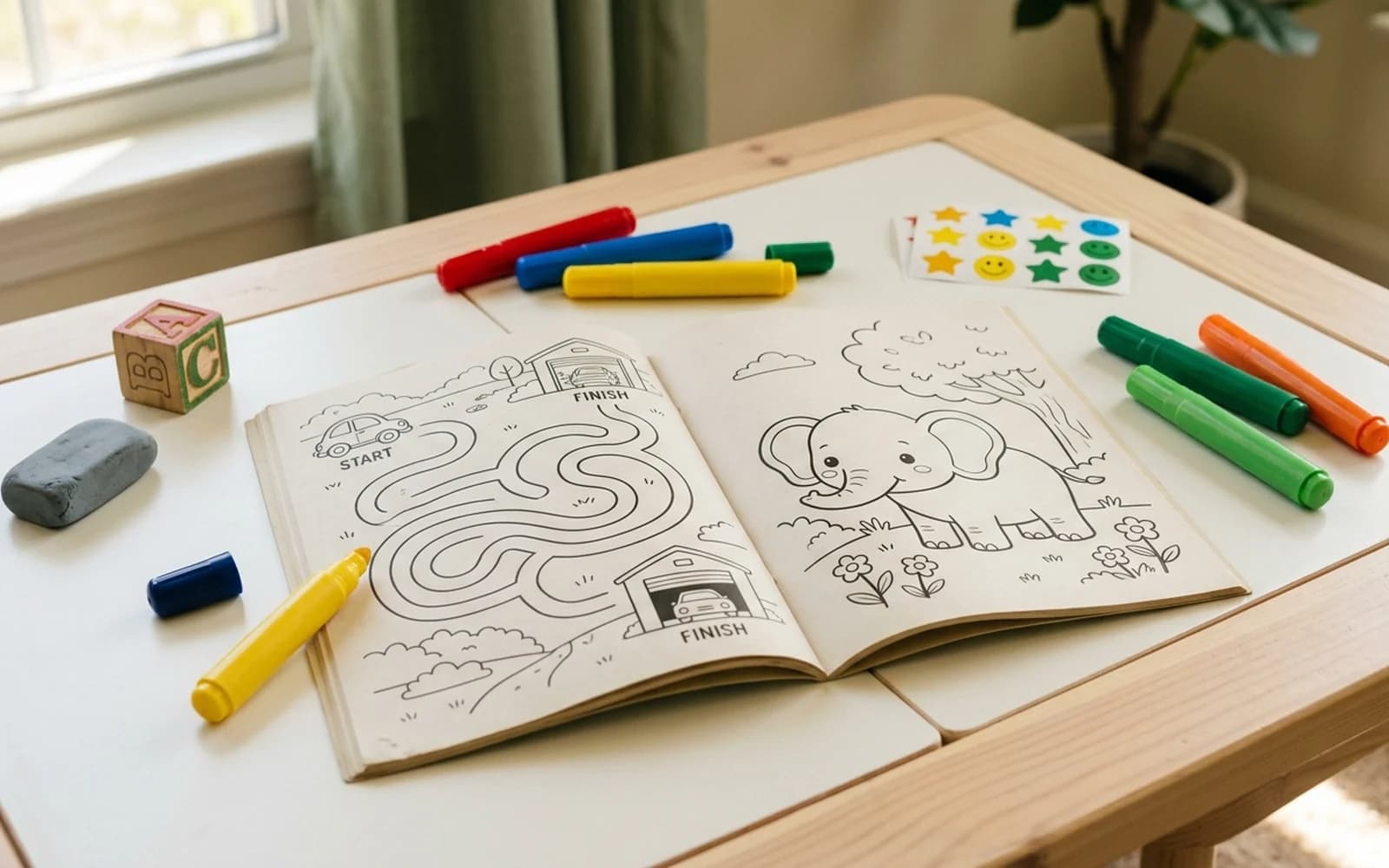
Generate puzzles, mazes, coloring, and word search in one book.
Eight activity book outputs in one engine.
Each template ships with age-appropriate puzzle mixes, the right cover palette, and the metadata pattern Amazon ranks for that niche.
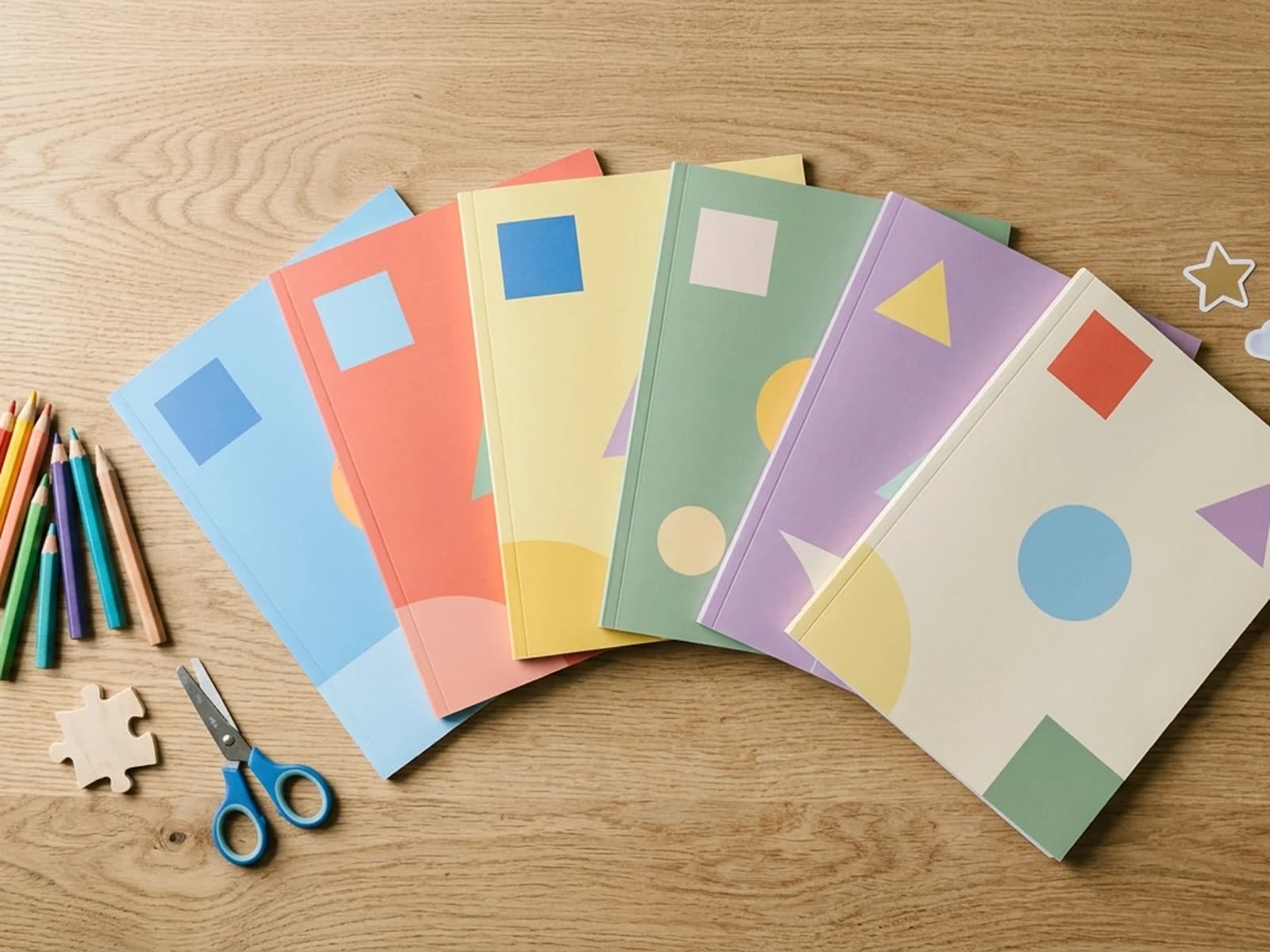
- Dinosaur word search for ages 6-9 with answer key
- Unicorn coloring and maze mix for ages 4-7
- Halloween 60-page seasonal activity book
- Christmas themed coloring and puzzles bundle
- Adult large-print word search with 100 themed puzzles
- Travel activity book for road trips ages 5-9
- Phonics and sight-word learning workbook K-1
- Mixed-puzzle adult sudoku, crossword, logic combo
Category to KDP-ready PDF in an afternoon.
Choose your category
Pick kids, adult, seasonal, themed, travel, or learning workbook. Each loads the right puzzle mix, page layout, and cover language for that buyer.
Customize content
Set age range, difficulty, theme (dinosaurs, princesses, Halloween, space), word list focus, and trim size. Puzzle types regenerate to match.
Generate interior + cover
KDPEasy renders every puzzle, maze, coloring page, and word search at print resolution plus a niche-matched front, spine, and back cover.
Export print-ready
Download a 300 DPI PDF interior with a solutions appendix and a full-wrap PDF cover. Both files drop straight into KDP. Full commercial rights.
Six outputs in two PDFs.
Mixed puzzle types
Mazes, word search, simple sudoku, dot-to-dot, spot-the-difference, color-by-number, and word fill-ins in one book. The variety drives reviews.
Solutions appendix
Every puzzle gets a clean answer key at the back of the book, auto-paginated. Reduces refund risk and lifts ratings.
Print-ready full-wrap cover
Front, spine, and back generated together. Spine width matches your page count automatically. No bleed math.
KDP formatting compliance
Trim size, bleed, margins, and minimum gutter set to the current KDP activity-book specification. No rejection on upload.
Age-appropriate difficulty
Pick the age range and difficulty regenerates automatically: chunkier mazes and 5-letter words for under-6, dense sudoku and longer word lists for 9-12.
Full commercial rights
Sell on Amazon KDP, IngramSpark, Etsy, your own store, anywhere. No watermark, no attribution, no revenue share.
The economics of a KDP activity book.
Standard worked example: 100-page 8.5x11 black-and-white activity book on white paper. List price $8.99, KDP paperback royalty 60% minus print cost.
100-page 8.5x11 black-and-white activity book on white paper. Per-page rate $0.012 plus fixed cost.
Standard for kids and themed activity books. Adult puzzle books sit at $9.99-$11.99.
KDP paperback royalty at $8.99 list price after print cost. Higher at $9.99-$11.99.
Themed and seasonal activity books can clear 5-15 daily sales in November-December.
Activity book economics reward depth. One themed niche (for example dinosaur word search ages 6-9), shipped in 10-15 variants with different sub-themes and cover palettes, commonly clears $1,500-$3,500 a month for indie publishers. Q4 holiday titles can lift monthly revenue by 2-3 times in November and December alone.
Six activity book niches the engine already knows.
Each sub-category ships with the right puzzle mix, age-band difficulty, cover palette, and metadata pattern. Pick one and ship.
Kids activity book
Mixed mazes, dot-to-dot, simple coloring, find-the-difference, and word fill-ins for ages 4-10. The classic gift-market workhorse.
Adult activity book
Sudoku, word search, crosswords, logic puzzles, and large-print formats for relaxation and cognitive health.
Seasonal activity book
Halloween, Christmas, Easter, summer, and back-to-school themed. Massive Q4 lift, fast-turnover Etsy crossover.
Themed character book
Animals, dinosaurs, unicorns, space, vehicles, and fantasy themes. The strongest single lever for sell-through on kids activity titles.
Travel activity book
Road-trip games, car bingo, scavenger hunts, and quiet activities for flights. Sells year-round, peaks in summer.
Learning workbook
Phonics, math facts, handwriting, sight words, and early-reader workbooks. Strongest year-round demand, summer-break and back-to-school spikes.
What activity book publishers ship with KDPEasy.
“My kids activity series was a pain because I had to design every page in Canva and hand-build a cover. KDPEasy let me ship a 100-page themed book in an afternoon. I have nine titles now and the dinosaur and unicorn ones never stop selling.”

“The solutions appendix alone is worth it. Half of my one-star reviews used to be parents saying there were no answer keys. KDPEasy adds them automatically and reviews went up almost overnight.”

“I publish seasonal activity books and Q4 is everything. I shipped four Halloween books and three Christmas books in 2024 using KDPEasy. They paid for the year. The covers look like a real publisher made them.”

KDP activity book questions, answered.
What is a KDP activity book and what counts as low-content?
+
A KDP activity book is a paperback you publish on Amazon Kindle Direct Publishing where the buyer interacts with the pages (solving puzzles, coloring, mazes, word search, dot-to-dot). It counts as low-content under KDP rules because the value is in the activity, not the prose. KDP treats activity books the same as journals and planners for formatting and royalty calculation. There is no Kindle eBook version. You earn 60% paperback royalty minus print cost.
What are the KDP activity book formatting requirements?
+
The current KDP specification: 8.5x11, 8.5x8.5, or 6x9 trim are the most common. Set bleed to 0.125 inches on all four sides if puzzles run to the edge. Minimum inside (gutter) margin is 0.375 inches for under-150 page books, 0.5 inches for 151-300 pages, 0.625 inches for 301-500 pages. Outside margin minimum is 0.25 inches. Submit a 300 DPI PDF for the interior and a full-wrap cover at 300 DPI matching your final page count and paper type. KDPEasy generates both files at the correct specification automatically.
Is Amazon KDP good for low-content puzzle books for kids?
+
Yes, with caveats. The pros: low print cost, no inventory, 60% royalty, evergreen demand, gift market lift in Q4, and a clear long-tail keyword strategy. The cons: the broad "kids puzzle book" search term is saturated, returns are higher than fiction because parents check for repeat content, and Amazon ad costs have risen since 2022. The winning approach is themed niche targeting (dinosaur word search ages 6-8, princess maze book ages 4-6) rather than generic. Niche-specific covers convert at three to five times the click-through of generic ones.
What are the best niches for kids puzzle books on Amazon KDP in 2025?
+
The strongest 2025 niches combine a specific theme with a specific age band. Top performers: dinosaur word search for ages 6-9, unicorn coloring and activity for ages 4-7, space and rocket mazes for ages 5-8, princess sticker and puzzle for ages 3-5, Pokemon-style monster puzzles for ages 7-10, Halloween activity for ages 4-8, Christmas activity for ages 4-8, summer beach activity for ages 5-9, animal facts and puzzle hybrids for ages 7-10, and back-to-school workbooks for kindergarten through grade 3. Specificity beats generic every time.
How saturated is the word search and word fill-in puzzle market for kids?
+
The generic "kids word search book" search is saturated, often with 50+ pages of results dominated by long-running publishers. But the long tail is wide open. Themed combinations (Halloween word search ages 7-9, dinosaur word search large print) consistently have top-100 ranks earned by KDP publishers in their first 90 days. The "word fill-in" sub-niche (where missing letters need to be added) is less saturated than straight word search because fewer tools generate it correctly. KDPEasy handles fill-ins, themed search, and difficulty bands as standard.
What are the pros and cons of publishing low-content word fill-in puzzle books for kids on KDP?
+
Pros: low production cost (KDPEasy generates the full book), evergreen demand from parents and teachers, gift market lift in Q4 and back-to-school, no inventory or shipping, 60% royalty, and a clear keyword strategy. Cons: high competition at the generic end, return rate higher than fiction (5-12%), Amazon ad costs require careful management, and reviews come slower than for novels because young children rarely write reviews. The break-even formula is straightforward: cover your $2-3 print cost plus $1-2 of ad spend per sale and you net $3-5 per copy on a $9.99-$11.99 list price.
How do I select a puzzle book based on difficulty and type?
+
Match the puzzle type and difficulty to a specific age band and a specific reading level. Ages 3-5: dot-to-dot up to 20 dots, simple coloring outlines, picture matching, basic mazes with 3-5 turns. Ages 5-7: dot-to-dot up to 50, easy word search with 4-5 letter words, color-by-number, mazes with 8-12 turns. Ages 7-9: word search with 6-letter words, simple sudoku (4x4 to 6x6), find the difference, crossword with picture clues. Ages 9-12: 9x9 sudoku, logic puzzles, themed word search with longer lists, fill-in crosswords. Adult puzzle books split into beginner (large print 16x16 word search, easy sudoku) and expert (20x20 word search, killer sudoku, cryptic crosswords).
How does KDPEasy handle the interior, not just the cover, for activity books?
+
KDPEasy generates the full activity book interior and the full-wrap cover in one workflow. You pick a category (kids, adult, seasonal, themed, travel, learning), set age range and difficulty, choose puzzle types and theme, and the engine renders every page at print resolution. The puzzles are unique to your book (not licensed templates). A solutions appendix is generated automatically. The cover is rendered at the same time with the spine width matched to your final page count. You export one PDF for the interior and one for the cover. Both files drop straight into KDP.
Can I mix puzzle types (mazes, word search, coloring, sudoku) in one book?
+
Yes, and this is one of the strongest moves for activity books. Variety drives reviews because parents see the value across multiple sessions. KDPEasy lets you set the proportion of each puzzle type (for example: 30% mazes, 25% word search, 25% color-by-number, 20% spot-the-difference). The cover communicates "60 mixed activities" which converts better than a single-type book at the same price.
What is the realistic earning potential for a KDP activity book in 2025?
+
A single well-niched themed activity book consistently doing 2 sales a day at $8.99 list nets roughly $175 a month after print cost. A 10-title backlist of themed kids activity books, with strong Q4 performers, commonly clears $2,000-$5,000 a month for indie publishers who niche aggressively and refresh seasonal covers each year. Top performers in the puzzle and activity niche clear $10,000+ a month with 30-100 titles. The category rewards depth: one publisher, one niche (for example dinosaur word search for ages 6-9), shipped in 15-20 variants.
Adjacent niches and deeper reading.
Children's activity books
BISAC codes, age-band research, and competitive analysis for the broader kids activity market.
Maze books
The single best sub-niche for new puzzle publishers. Lower competition, faster ranking, strong gift-market lift.
Word search puzzle books
Themed word search, large print, kids and adult variants. The workhorse of low-content publishing.
Word search creator
Generate themed word search puzzles by topic. Pairs natively with the activity book workflow.
Themed activity books on KDP
Why themed activity books outperform generic ones, with the keyword clusters that rank in 2025.
Seasonal activity books on KDP
Q4 and holiday strategy: which seasons to target, when to upload, and how to refresh covers each year.
Toddler busy books on KDP
The ages 2-4 niche that converts on emotional gift purchase. Cover language, page architecture, pricing.
Kids activity book KDP guide
The full publishing playbook: theme selection, formatting, listing optimization, and ad spend.
Best puzzle book types on KDP
Side-by-side comparison of mazes, word search, sudoku, crosswords, and logic puzzles by competition and margin.
Ship your activity book this week.
Puzzles, mazes, coloring, cover. One workflow. Your first export is on the house.