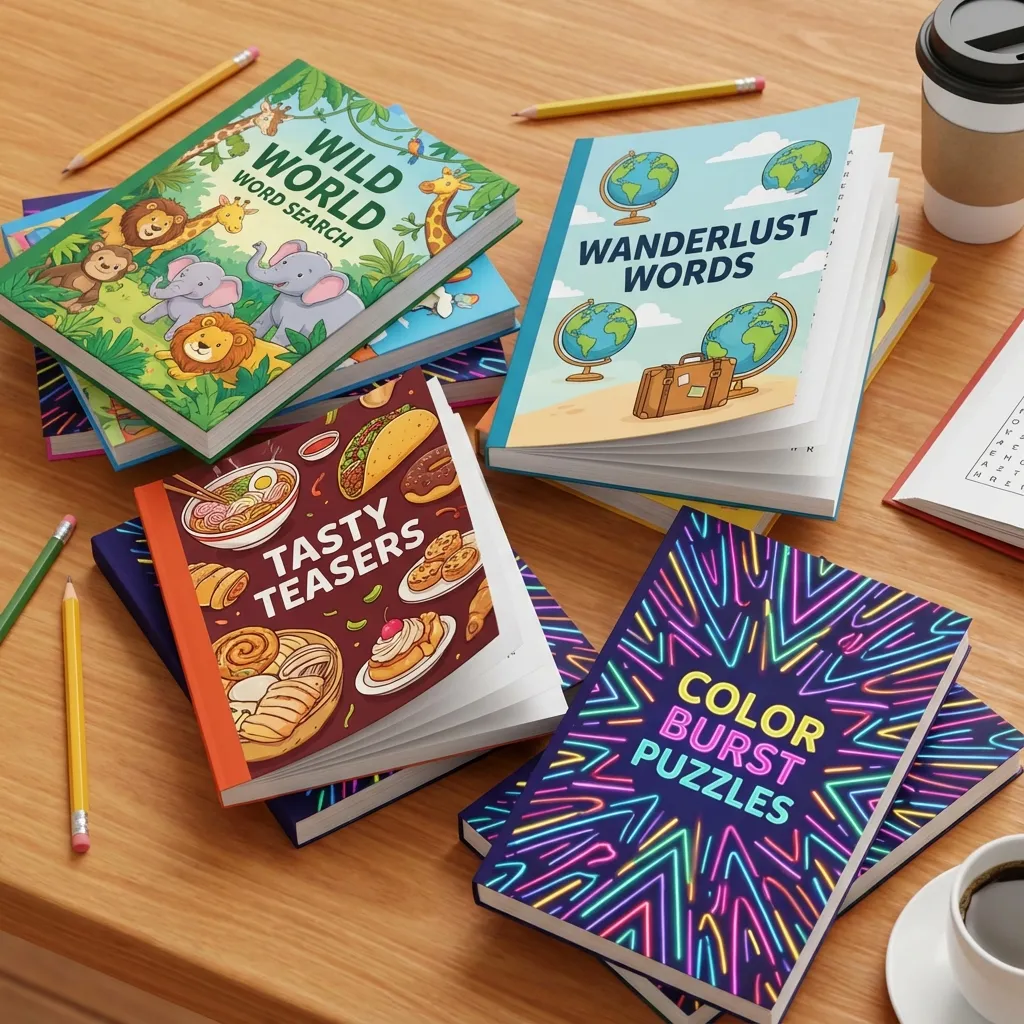

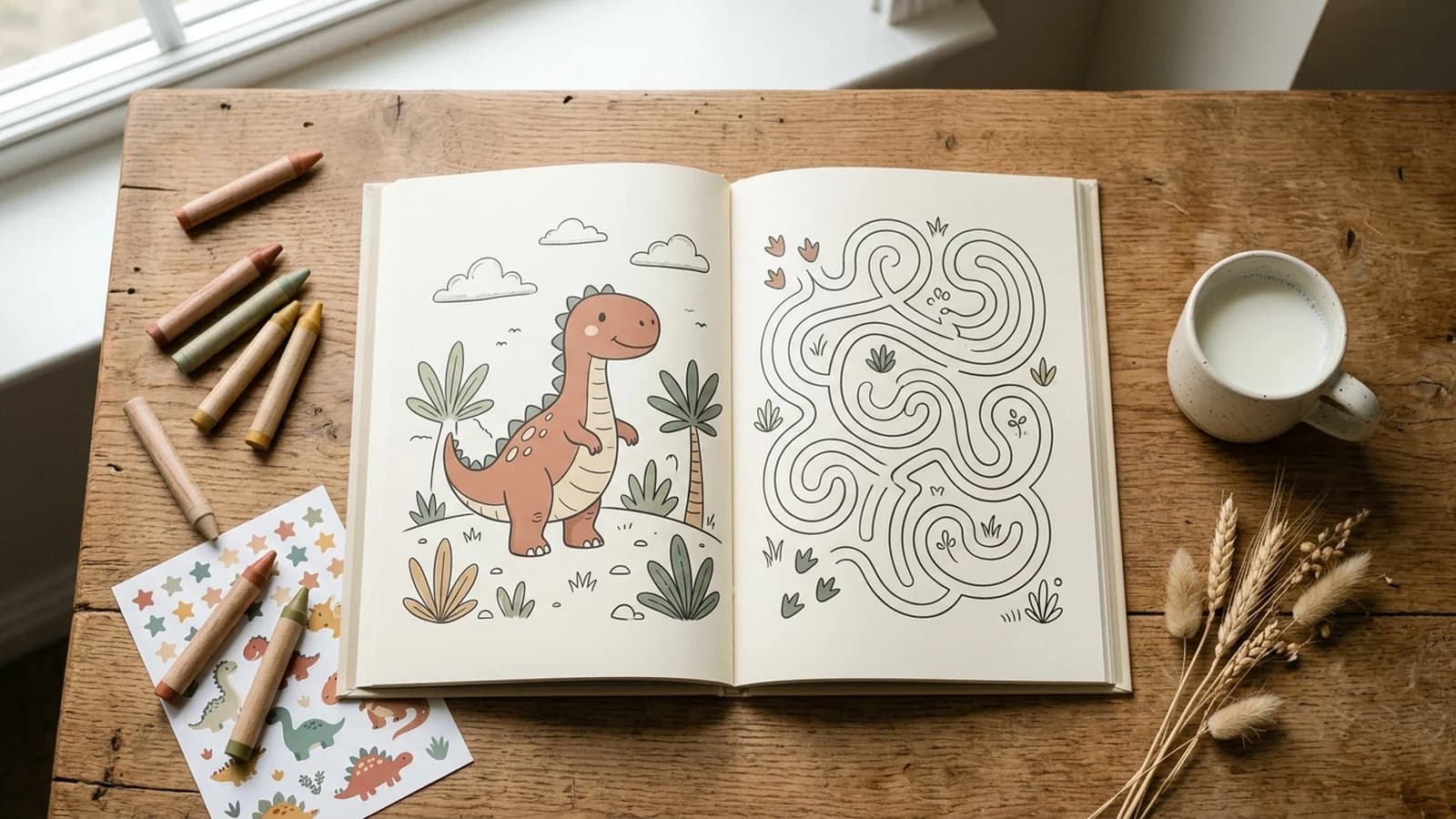
Most new KDP publishers lose to a generic activity book before they upload a file. The category is a crowded knife fight, ranked by ad spend and review velocity, and a small publisher cannot outspend the incumbents. The only structural advantage you can buy with effort instead of money is a narrow theme matched to a tight age band. This guide is the working playbook for doing exactly that.
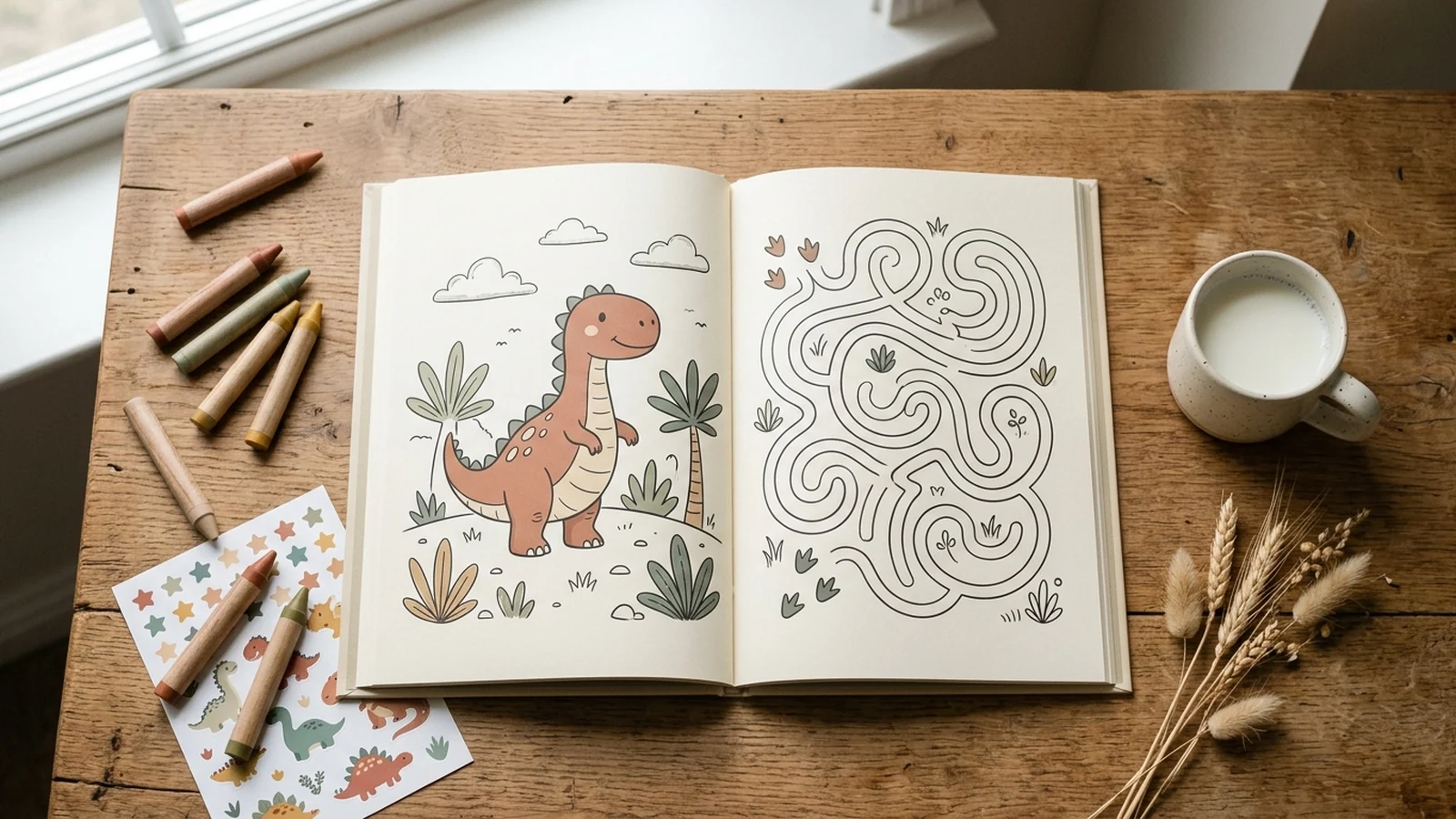
The honest market read in 2026
- Generic "kids activity book": 50,000+ competitors, average price compressed to $6.99, ad-cost-per-sale frequently above royalty.
- Specific "dinosaur activity book ages 7-10": 1,500-3,000 competitors, average price $8.99-$9.99, ad cost ratios that actually work.
- Themed premium: Themed titles in healthy niches command a $1.50-$2.50 price uplift over generic equivalents at the same page count.
- Repeat purchase: A child obsessed with construction trucks will buy three to five themed books inside a year. A child casually browsing "activity books" will buy one.
- Gift purchases: Roughly 40 percent of themed sales are gifts. Aunts and grandparents shop by obsession, not by category.
Why generic loses and themed wins
Children ages 4-10 develop intense, time-bound obsessions that last six to twenty-four months: dinosaurs, unicorns, space, specific vehicles, sharks, princesses, superheroes, ninjas. Parents know these obsessions intimately and search for them by name. The Amazon search box is a literal reflection of those obsessions: "dinosaur activity book ages 6", "construction truck coloring book for toddlers", "unicorn puzzle book". A generic title cannot match any of those queries with the precision of a themed one.
Themed books also win on the back end. A themed cover thumbnails better in a crowded carousel because it shows one recognizable hero. A themed description converts better because it speaks directly to the child the parent is shopping for. A themed series back-matter spread ("If you loved the dinosaurs in this book, try Volume 2: Carnivores") compounds sales in a way a generic title cannot.
The 4-part themed success formula
- One theme, all the way through. Do not mix dinosaurs with vehicles. Do not mix unicorns with mermaids. One theme is a feature, two themes is a confused product.
- One age band per book. 4-6, 7-10 or 11+. Do not write "ages 4-10." Parents reading reviews will eviscerate you for ambiguity.
- Educational depth where natural. Real dinosaur names. Real planet facts. Real construction vehicle terminology. The theme has to teach something or it feels like filler.
- Series first, single books second. Plan three to five volumes before you upload Volume 1. Cross-link them in the back of every book.
The 2026 theme map: what is hot, what is dead
Themes shift slowly but they do shift. A theme that was profitable in 2022 may now be a knife fight because every coloring book publisher and their AI cousin piled in. The table below is the honest read for 2026. "Saturation" assumes you do not have an established brand, ad budget over $20 per day, or a designer on retainer.
| Theme | Strongest Age Band | Saturation (2026) | Realistic Price | Verdict |
|---|---|---|---|---|
| Dinosaurs (broad) | 7-10 | High | $8.99-$9.99 | Crowded, niche down |
| Dinosaurs (specific era) | 7-10, 11+ | Medium | $8.99-$10.99 | Strong |
| Unicorns (generic) | 4-6, 7-10 | Very High | $7.99-$8.99 | Avoid or sub-niche |
| Space and astronauts | 7-10, 11+ | Medium | $8.99-$10.99 | Strong |
| Construction vehicles | 4-6 | Medium | $6.99-$8.99 | Strong (4-6 sweet spot) |
| Princess and fairy tale | 4-6 | High | $7.99-$8.99 | Crowded, niche down |
| Superheroes (generic) | 7-10 | High | $7.99-$9.99 | IP risk, avoid trademarks |
| Pets and farm animals | 4-6, 7-10 | Medium-High | $7.99-$9.99 | OK with strong cover |
| Science (STEM, experiments) | 7-10, 11+ | Low-Medium | $9.99-$11.99 | Underexplored |
| History (knights, Egypt, pirates) | 7-10, 11+ | Low | $8.99-$10.99 | Underexplored |
| Nature and bushcraft | 7-10, 11+ | Low | $9.99-$11.99 | Quiet winner |
| Ninjas, martial arts | 7-10 | Low-Medium | $8.99-$10.99 | Strong |
| Ocean and sea creatures | 4-6, 7-10 | Medium | $7.99-$9.99 | Strong |
| Sports (specific) | 7-10, 11+ | Low | $8.99-$10.99 | Strong, often missed |
A useful test for any theme: open Amazon, search the exact phrase a parent would type, and look at the top 20 organic results. If more than five are from the same publisher account, the niche is locked. If you see a mix of small publishers, recent publication dates, and varying cover quality, the niche is still wide open.
For deeper market-sizing logic, our KDP niche research system walks through the full filter we use to qualify a theme before committing to a 100-page production cycle.
Age-band targeting: the three buckets that actually exist
"Ages 4-10" is not a useful range. It is a marketing surrender. The parent of a four-year-old and the parent of a ten-year-old are buying different products, and trying to serve both creates a book that frustrates both. Pick one of the three real bands.
Ages 4-6: pre-readers, gross motor, big shapes
- Line weight: 3-4pt for coloring, 2pt minimum for mazes. Anything thinner disappears under a chunky crayon.
- Activity complexity: Mazes with 1-2 dead ends, dot-to-dot 1-20, word searches 6x6 with 3-5 letter words, matching with 4-6 items per page.
- Instructions: Zero or icon-based. A parent reads any text aloud.
- One activity per page. Crowded layouts cause meltdowns. Generous whitespace is a feature, not waste.
- Themed details: The dinosaur should be smiling. The truck should have eyes. Friendliness beats realism at this age.
Ages 7-10: confident readers, the volume sweet spot
- Line weight: 1-2pt standard, can support detail.
- Activity complexity: 10x10 word searches with diagonals, mazes with multiple dead ends, simple 7x7 crosswords with picture clues, dot-to-dot up to 50, 4x4 Sudoku with pictures.
- Instructions: 12-14pt, child reads them directly. Use clear verbs ("Find" not "Locate").
- Two activities per double-page spread acceptable if the activities are short.
- Themed depth: Use real species names, real spacecraft, real vehicle names. The child often knows more than you do, so research is non-negotiable.
Ages 11+: tweens, the underserved band
- Line weight: 0.5-1pt, supports complex detail.
- Activity complexity: 12x12-15x15 word searches with reverse and diagonal, full crosswords with text clues, cryptograms, logic puzzles, 6x6 and 9x9 Sudoku.
- Tone: Drop the cutesy. Treat them like the early teens they are. "Brain Boost" beats "Fun Time."
- Themed depth: Real history, real science, real terminology. This band rewards expertise.
- Cover signal: Less cartoon, more graphic. This is where you can borrow from YA cover language without losing the activity book promise.
Build your themed activity book cover in minutes
Generate a print-ready KDP cover with the right age signal, theme color story, and trim size for your book. Free to start.
Start freeThe activity mix that earns four-star reviews
Pure coloring books earn three stars on average. Pure puzzle books earn three-and-a-half. Mixed activity books, when the mix is thoughtful and the theme stays consistent, regularly clear four stars. The reason is simple: parents do not know in advance which activity will hook their child, and variety hedges that risk. The grid below is the mix we use for a 100-page themed book aimed at ages 7-10.
| Activity | Pages | Themed Example (Dinosaurs) |
|---|---|---|
| Themed coloring | 30 | Eight named species, four prehistoric scenes, eighteen mixed fillers |
| Word searches | 15 | Themed vocabulary: species names, geological eras, anatomy |
| Mazes | 15 | "Help the T-Rex through the forest," "Escape the volcano" |
| Dot-to-dots | 10 | Reveal dinosaur silhouettes (numbers 1-40) |
| Spot-the-difference and matching | 10 | Two prehistoric scenes with five differences; match species to names |
| Crosswords and short puzzles | 10 | 7x7 grids with picture clues, themed riddles |
| Educational fact pages | 10 | Size comparisons, "Did you know" trivia, diet and habitat |
The five-star reviews almost always cite the fact pages. They cost the least to produce and contribute the most to perceived value, because they make the book feel like more than a coloring book. Do not skip them.
For deeper specifications on each activity type, see our companion guides on creating word search books, maze puzzle books, and tuning puzzle difficulty by age.
Cover conventions: what the bestsellers all share
Pull the top fifty themed activity book covers in any healthy niche and you will see a consistent visual grammar. The publishers who fight against it lose. The publishers who lean into it, with one or two distinctive touches, win.
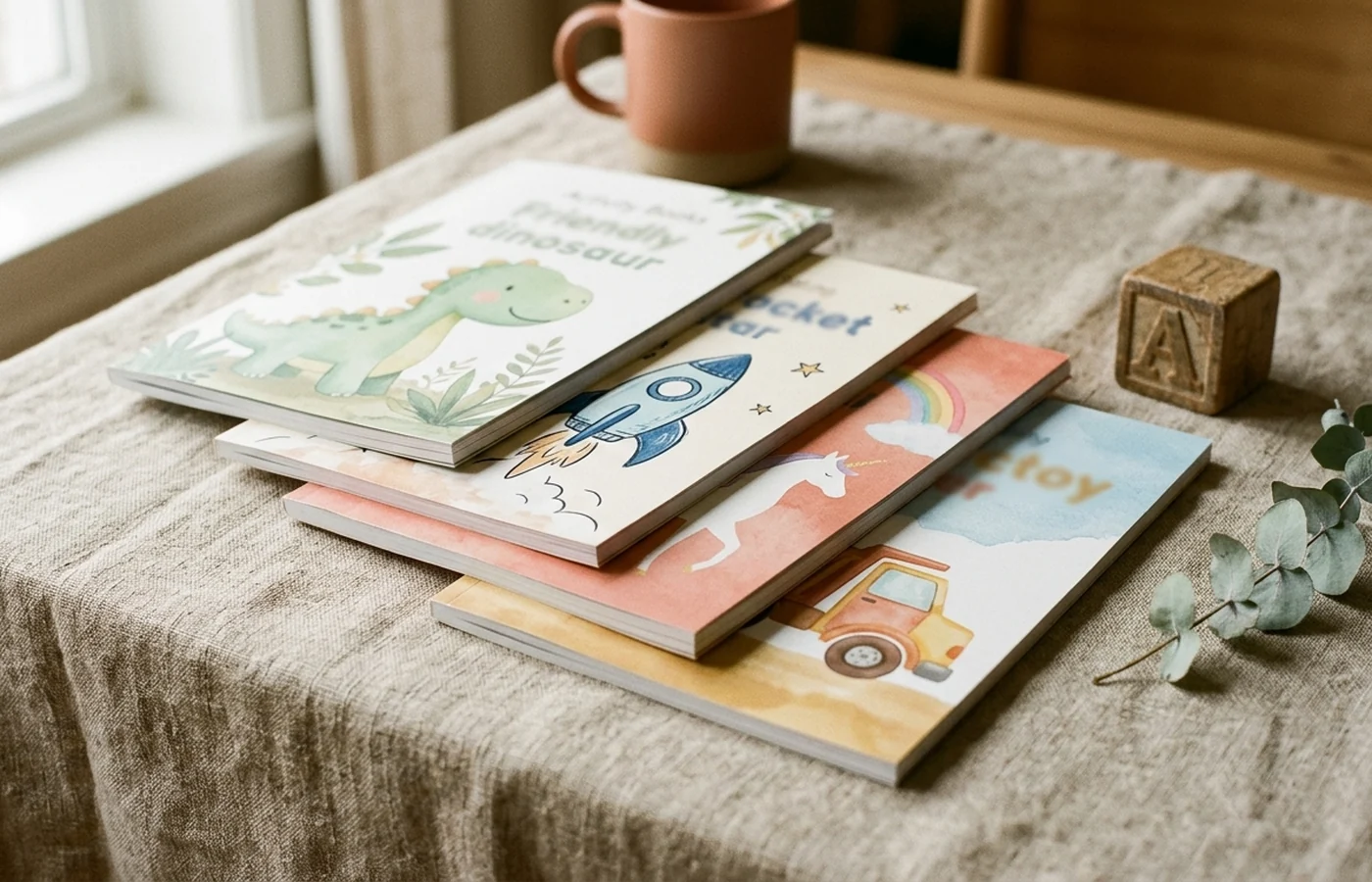
- One hero character or object. A single dinosaur, a single rocket, a single unicorn. Multiple characters fight for attention at thumbnail size and the cover loses.
- High-saturation colors with one anchor. Pick one dominant color (jungle green for dinosaurs, deep navy for space, magenta for unicorn) and let the secondary palette support it. Tonal covers die in the carousel.
- Title in bold display sans or chunky serif. Script and thin fonts disappear at 200x300 pixels. Bold is non-negotiable.
- Visible age band. "Ages 4-8" or "Ages 7-10" in a contrasting badge. Parents filter mentally by age before they read the title.
- Value cue. "100 Fun Activities" or "Mazes, Coloring, Puzzles and More" reassures the parent the book has variety. Single-activity claims convert worse.
For full cover specs, see our KDP cover requirements checklist and how to create a perfect KDP cover. If you want an automated path, our KDP cover size calculator outputs the exact wraparound dimensions for your page count and trim size in seconds.
Pricing: the honest $5.99-$9.99 band
The themed kids activity book market in 2026 lives between $5.99 and $9.99. Outside that range, the math stops working. Below $5.99 you lose royalty after print cost. Above $9.99 your conversion rate drops below the threshold where AMS ads break even. The table below shows where each book length lands.
| Book length | Pages | Realistic price | Approx royalty |
|---|---|---|---|
| Light themed (toddler) | 40-60 | $5.99-$6.99 | $2.10-$2.45 |
| Standard themed | 80-100 | $7.99-$8.99 | $2.80-$3.15 |
| Premium themed | 100-120 | $8.99-$9.99 | $3.15-$3.50 |
| Educational-themed (premium) | 120-150 | $9.99-$11.99 | $3.50-$4.20 |
Use our KDP royalty calculator to model the exact margin at each price point for your specific trim size and page count. The difference between $7.99 and $8.99 is often the difference between paid ads being profitable or not.
For deeper pricing logic by competition level, our breakdown of KDP coloring book pricing covers the same dynamics for the coloring sub-segment.
Series strategy: how a single theme becomes a catalog
A standalone themed book is a transaction. A themed series is a business. The math is brutal: a single book at $8.99 with twenty sales per month is $63 of royalty. A four-book series at the same per-book velocity is $252 per month, plus the lift that comes from buyers who pick up Volume 2 immediately after Volume 1.
The strongest series pattern we have used and seen:
- Volume 1: broad introduction. "Dinosaur Activity Book Ages 7-10." Wide coverage of the theme. Optimized for the broadest keyword.
- Volume 2: first sub-theme. "Carnivore Dinosaur Activity Book Ages 7-10." Tightens the theme, deepens the educational content, captures a more specific search.
- Volume 3: second sub-theme. "Plant-Eating Dinosaur Activity Book Ages 7-10." Same audience, complementary content, same series visual language.
- Volume 4: cross-cut. "Flying and Sea Reptile Activity Book Ages 7-10." Widens the theme back out, captures buyers who got hooked on volumes 2 and 3.
- Volume 5 onward: regional, era-specific, or activity-focused (e.g., "Dinosaur Maze Book") within the same series visual identity.
Use identical cover layouts across the series. Same title position, same color block for the value cue, same age badge. Switch only the hero illustration and the dominant accent color. The point is shelf-recognition. A parent who liked Volume 1 should spot Volume 2 in a half-second scan of the search results.
For series cover discipline, our guide to cohesive series cover design walks through the exact template logic.
Title formulas that work in 2026
Amazon's title field is also the most important keyword field. Wasting it on cleverness is a beginner mistake. The bestselling themed activity books in 2026 use one of these four structures.
- Theme + Activity Book + Age + Activity types + Page count: "Dinosaur Activity Book for Kids Ages 7-10: Coloring, Mazes, Word Searches and Puzzles | 100 Fun Pages"
- Theme + Coloring and Activity Book + Age: "Construction Vehicle Coloring and Activity Book for Kids Ages 4-6"
- The Ultimate + Theme + Book + Activity types + Age: "The Ultimate Space Activity Book: Mazes, Puzzles and Facts for Kids Ages 7-10"
- Theme + Fun + Activity types + Age: "Ocean Animal Fun: Coloring, Puzzles and Maze Book for Kids Ages 7-10"
Critical rules: include the age band, include at least two specific activity types, and include a value cue (page count or "100 Fun Activities"). Skip "best," "amazing," and "perfect" since they are filler and Amazon's algorithm does not weight them.
Profit projections: the honest medians
The numbers below are medians from healthy niches with competent covers and no paid ads. They are not aspirational. They are what a competent, patient publisher can expect.
Single themed book, ages 7-10, 100 pages, $8.99
- Royalty per sale: roughly $3.15
- Month 3: 25-40 sales = $80-$125
- Month 6: 50-80 sales = $160-$250
- Month 12: 80-120 sales = $250-$380
- Year 1 total: $2,800-$4,200 in a healthy niche
Four-book themed series in same niche
- Cross-link in back matter, identical visual language
- Month 6: 200-320 combined sales = $630-$1,000 per month
- Month 12: 320-480 combined sales = $1,000-$1,500 per month
- Year 1 combined: $8,000-$14,000
Generate your themed series covers in one go
Identical layouts, swap the hero illustration and accent color per volume. Free trial, print-ready output.
Try KDPEasy freeSub-genre saturation: the niches to avoid in 2026
Niches now too crowded for new publishers
- Generic unicorn activity books, ages 4-8. Top 30 organic results are dominated by ten established publishers with hundreds of reviews each.
- Generic dinosaur coloring books (not activity). Pure coloring is over-supplied. Activity variants still work.
- Mermaid coloring books, ages 4-8. The same five publishers and templated content drown out new entrants.
- Anything using licensed character names (Paw Patrol, Bluey, Frozen, etc.). Trademark risk regardless of niche health.
- Generic "kids activity book" or "kids coloring book." No theme, no advantage, instant loss.
Common mistakes that kill themed books
- Mixing themes. "Dinosaurs and Space Activity Book" sounds clever and converts at half the rate of either theme alone.
- Mixing age bands. "Ages 4-12" is a marketing concession and reviewers will punish you for it.
- Surface-level themed content. Generic "dinosaur" with no species names reads as filler. Name the T-Rex, the Triceratops, the Velociraptor.
- Inconsistent visual style. A realistic dinosaur on page 12 and a cartoon dinosaur on page 14 ruins the tone. Pick a style and hold it.
- No series planning. Uploading Volume 1 with no Volume 2 in the pipeline leaves money on the table for the rest of the book\'s life.
- Weak back matter. The last three pages should sell Volume 2. Most beginners use them for solutions only and miss the cross-sell.
- Trademark drift. Avoid licensed characters and franchise names. The IP risk is not worth the search bump.
10-day production plan
- Day 1: niche validation. Pick a theme, run the top-20 audit, confirm fewer than five repeat publishers in the front page. Lock the age band.
- Day 2: research. Build a list of 25-40 themed nouns (species, vehicles, planets, eras). This list seeds your activity content.
- Day 3-4: content production. Generate or commission 30 themed coloring pages. Use a generator or AI for word searches and mazes built on your themed noun list.
- Day 5: educational pages. Write 10 fact pages with verified information. This is where you separate from templated competitors.
- Day 6: layout. Assemble the interior in your tool of choice. Tune line weights to age band. Add front matter (title, "this book belongs to," brief intro).
- Day 7: solutions and back matter. Build solution pages for puzzles. Reserve the last two pages for series cross-sell once Volumes 2-4 are planned.
- Day 8: cover. Hero illustration, bold title, age badge, value cue. Test at thumbnail size before exporting. Pull the wraparound dimensions from our cover size calculator.
- Day 9: KDP upload. Title formula, description with bullet points, seven backend keywords aligned with our backend keywords guide.
- Day 10: launch. Order an author proof, verify print quality, then publish. Set a $5/day AMS test campaign on five themed phrase-match keywords.
Day 11 onward: plan Volume 2.
The contrarian recommendation
If you take one thing from this guide, take this: the temptation to publish a generic "kids activity book" because the search volume is large is the single most expensive mistake a new KDP publisher makes. The volume is real. The competition is brutal. The math does not work for anyone without an established brand or a five-figure ad budget.
Pick a theme you find genuinely interesting. Pick one age band. Commit to four volumes before you upload Volume 1. Build a visual language consistent enough that someone could spot your series from across an aisle. That is the entire business model. Everything else, including this guide, is just supporting infrastructure.
A FEW MORE ANSWERS
Frequently asked questions
A themed activity book is built around a single child obsession, like dinosaurs, unicorns, space, construction vehicles or superheroes, with every coloring page, maze, word search and dot-to-dot tied to that theme. It beats a generic "kids activity book" because parents and gift-givers shop by obsession, not by category. Searches like "dinosaur activity book ages 6-8" face a few thousand competitors instead of 50,000+, and themed books typically command a $2-$3 price premium because they feel like a gift rather than a filler purchase.

ABOUT THE AUTHOR
Danielle Okonkwo
Marketing & Growth Lead at KDPEasy. Danielle is a published author with 12+ titles on Amazon KDP and a former book blogger. She draws on hands-on publishing experience and years of testing what works in the KDP marketplace.
Meet Danielle